First day cover ·
Small Prophets Is Apple TV's Quiet Standout, and It Doesn't Need Big Budgets
Mackenzie Crook's six-episode British comedy Small Prophets reaches Apple TV with near-universal critical praise. Here's who it suits and why.
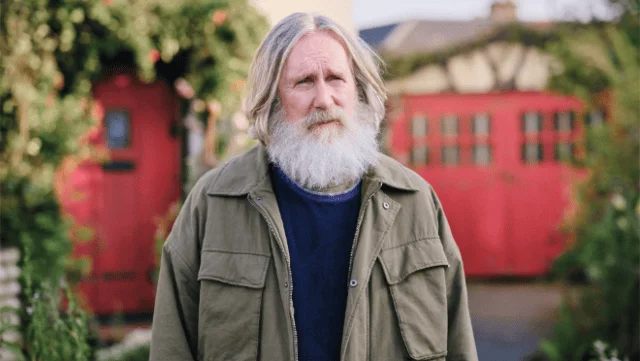
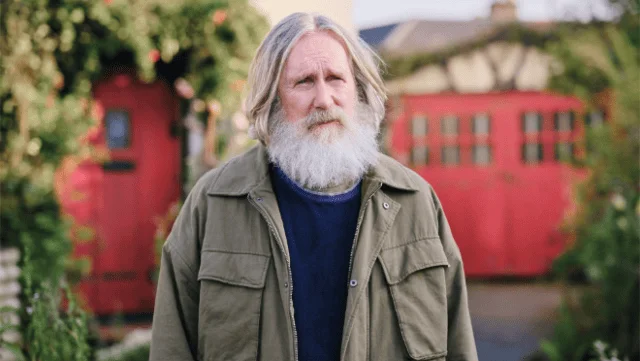
Apple TV has spent the year leaning on big-budget originals and awards hardware, so a show that arrived from elsewhere and plays this quietly stands out. Small Prophets was made in Britain, premiered on BBC Two, and has now reached Apple's service. Critics are already placing it among the platform's best offerings of 2026, and my read is that the praise is earned, though the show asks for a particular kind of viewer.
A grieving man, a shed full of homunculi
Mackenzie Crook created, wrote and directed the series. Anyone who knows Detectorists or his turn as Gareth in the original UK The Office will recognise the sensibility: gentle, slightly off-kilter, and comfortable sitting with awkward silences.
The six episodes follow Michael Sleep, played by Pearce Quigley, a lonely hardware-store worker in the Manchester area. His life stopped seven years ago on Christmas Eve, when his partner Clea disappeared. He still lives among her unpacked boxes, and the Christmas decorations she left behind are still up. His days run between work and visits to his eccentric father Brian, played by Sir Michael Palin.
Then Brian passes along an old alchemical recipe involving rainwater, horse manure and a few other ingredients. Michael starts growing tiny prophetic homunculi in jars in his garden shed, hoping the creatures can tell him what happened to Clea. That premise could easily tip into whimsy for its own sake. Here it doesn't, because the search for an answer is rooted in ordinary loss, and the strangeness of the process only sharpens how stuck Michael is.

Along the way he builds an unlikely friendship with a younger coworker, Kacey, played by Lauren Patel. He also deals with a nosy neighbour and a difficult boss, played by Crook himself. Those side threads do real work, filling out a small world without padding it.
What the critics are saying
The reviews are unusually consistent. The series holds a 100% score on Rotten Tomatoes and an 87 on Metacritic, which Metacritic reads as universal acclaim.
The Hollywood Reporter's Daniel Fienberg argued that it "may be the finest show to hit Apple this year." He added a caveat, though: the ranking depends on how much you rate the Emmy-winning horror-comedy Widow's Bay. He also singled out Quigley's lead performance as one of the year's best.

The Verge described the show as "extremely strong in basically every regard," and praised its "perfect mix of sweet and silly tones." Its goofy, warm streak, the review suggested, fills a gap on Apple TV that the platform's more serious prestige dramas leave open. The Guardian gave it five stars for its "gorgeous surprises." Other write-ups have used phrases like "gentle, jewel-like, unhurried masterpiece" and "pure, pure pleasure." Those are strong words, and they're one critic's words, so treat them as a sense of tone rather than a verdict.
Why the tone works
Crook's style here is droll rather than broad. The humour lands because it's dry, and the whimsy never quite becomes twee. Reviewers keep coming back to the way the show can break your heart and then mend it within the same stretch. That's a hard balance, and it's the main reason the series feels more substantial than its alchemical premise suggests.
Reviewers also single out the supporting cast. Palin's return to television comedy at 82 gets attention, and Quigley, who was a supporting player in Detectorists, gets the lead here and makes Michael sarcastic but oddly lovable. Patel's Kacey has been described as a breakout. The story threads are tidy without feeling forced, which is what critics mean when they talk about the way the arcs dovetail.
Where it came from and what comes next
In the UK the show was a clear hit. It became the BBC's biggest new scripted launch of the year, with viewing peaking at 9.2 million. The BBC has already ordered a second season, due in 2027.
Apple's deal is the more unusual part. It bought worldwide rights after the BBC run, and by the reporting available this is the first time the company has acquired an existing English-language series in this way. That's a notable shift for a streamer that has mostly built its catalogue in-house. Outside the UK, where Apple TV subscribers will have to wait until 2027, the show is available now.
For anyone who doesn't already subscribe, Apple lists Apple TV at $14.99 per month with a seven-day free trial for new subscribers. The service is available in over 100 countries and regions across Apple's devices and a range of smart TVs, streaming sticks and game consoles. You can find it at tv.apple.com.
My take is simple. If you want a show that's funny, sad and strange in the same half-hour, and you liked Detectorists, this is worth a weekend. If you need fast plot twists, it probably isn't for you. Watch how the second season is handled in 2027, too. A show this quiet doesn't often get a second chance to earn its following, and the BBC has already made the call to try.