First day cover ·
Effect Audio Perseus Review: Nine Drivers, Warm Mids and a Case That Lets You Down
Effect Audio's $999 Perseus packs nine drivers into a warm, bass-forward IEM with a strong midrange. The tangling cable and flimsy case are harder to forgive.
Effect Audio has spent years building some of the most elaborate aftermarket IEM cables on the market, so the real question with the $999 Perseus is whether that cable expertise carries over to the earphone itself. Building a great cable and engineering a complete IEM are different jobs. A nine-driver count sounds impressive on a spec sheet, but it doesn't tell you much about how the drivers sound together. The Perseus is a useful test of that idea.
The company, based in Singapore, has been making premium cables since 2009 and introduced its own Axiom earphone in 2021. It has also worked with other brands, including Elysian Acoustic Labs. The Perseus is its most ambitious in-house IEM so far, and it sits in one of the most crowded price brackets in personal audio.
What's inside the shells
Each earpiece carries nine drivers spread across four types, which Effect Audio calls a quadbrid design. The lineup breaks down like this:

- Bass: two 8mm LSR dynamic drivers in an isobaric push-pull arrangement
- Midrange: two customized 2300 balanced armature drivers
- Treble: four micro planar magnetic tweeters
- Spatial reproduction: one PTZ bone conduction driver
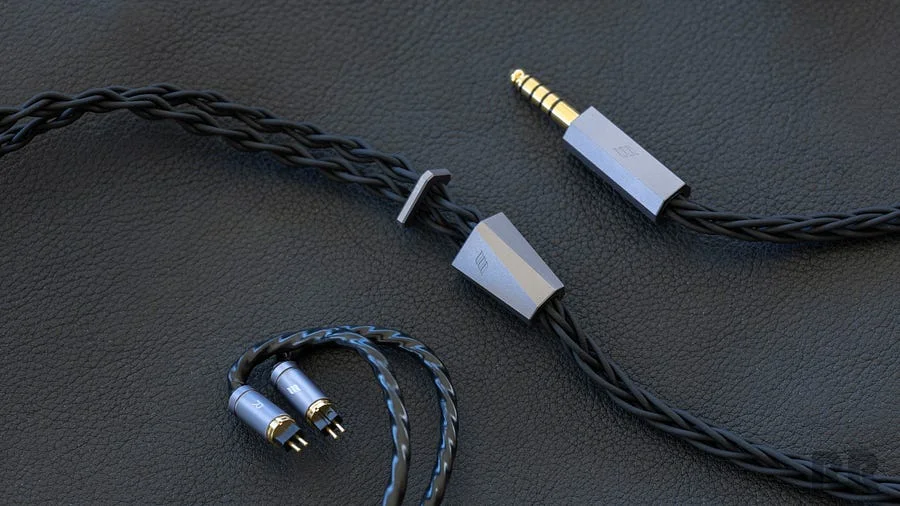
A 4-way crossover ties these together. Other published figures include a frequency response of 10 Hz to 40 kHz, sensitivity of 108 dB at 1 kHz and impedance of 18 ohms at 1 kHz. The shells are aluminum, and the included cable is the Effect Audio ORDINIS, an 8-conductor, 26 AWG design that measures 120 cm ±5 cm. Connectors are ConX 2-pin, with a 4.4mm balanced plug as standard and a 3.5mm option.

Those numbers tell you the Perseus is built for drive and resolution rather than easy-to-drive convenience, so pair it with a source that has enough power. The 18-ohm impedance is manageable, but the sensitivity figure suggests it will scale with a good dongle or amp.

Build and cable
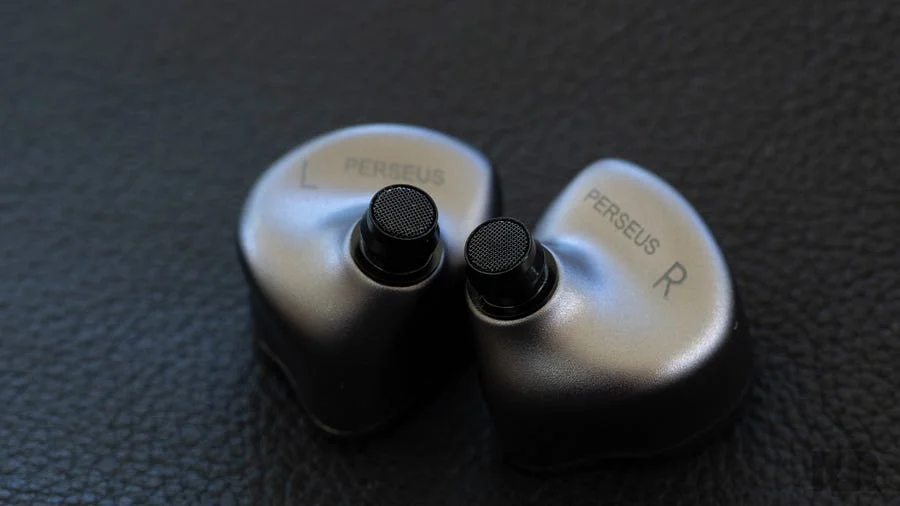
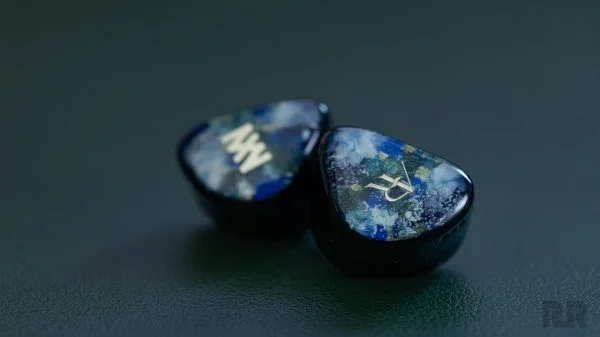
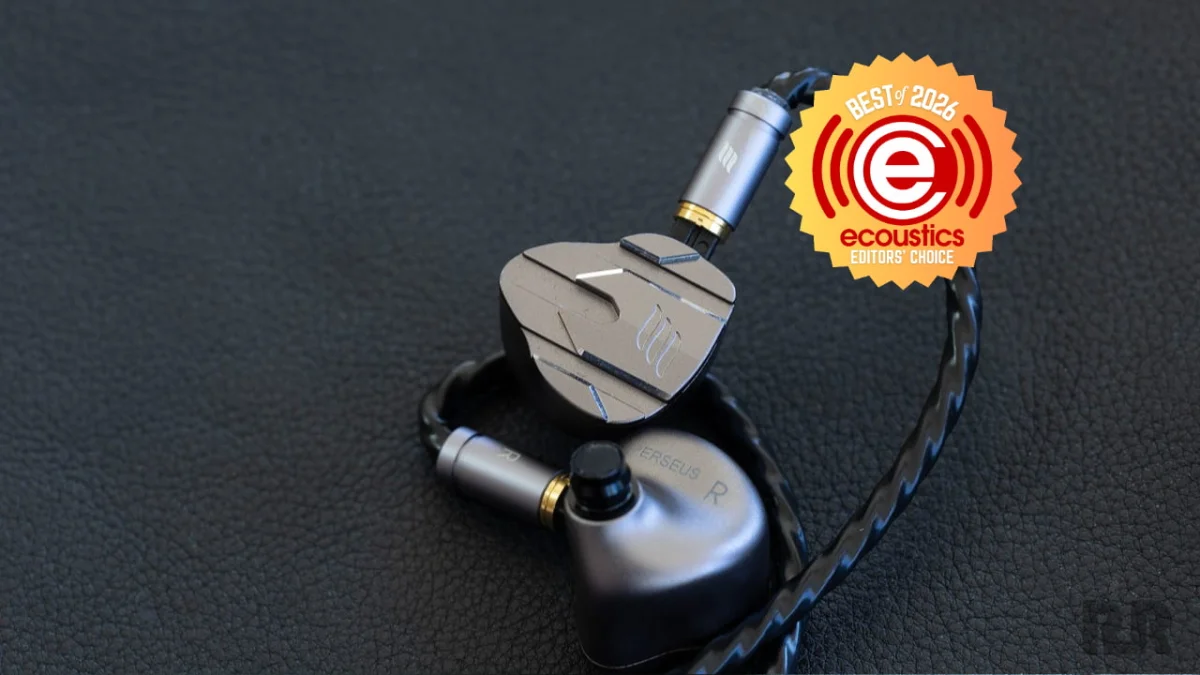
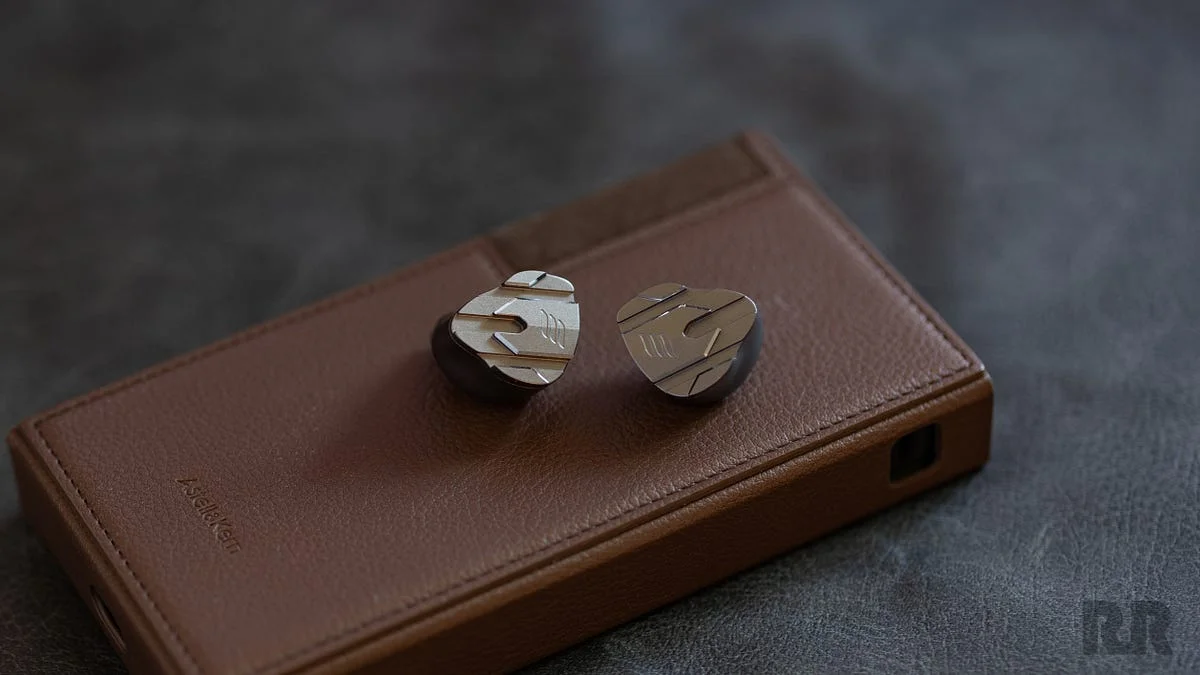
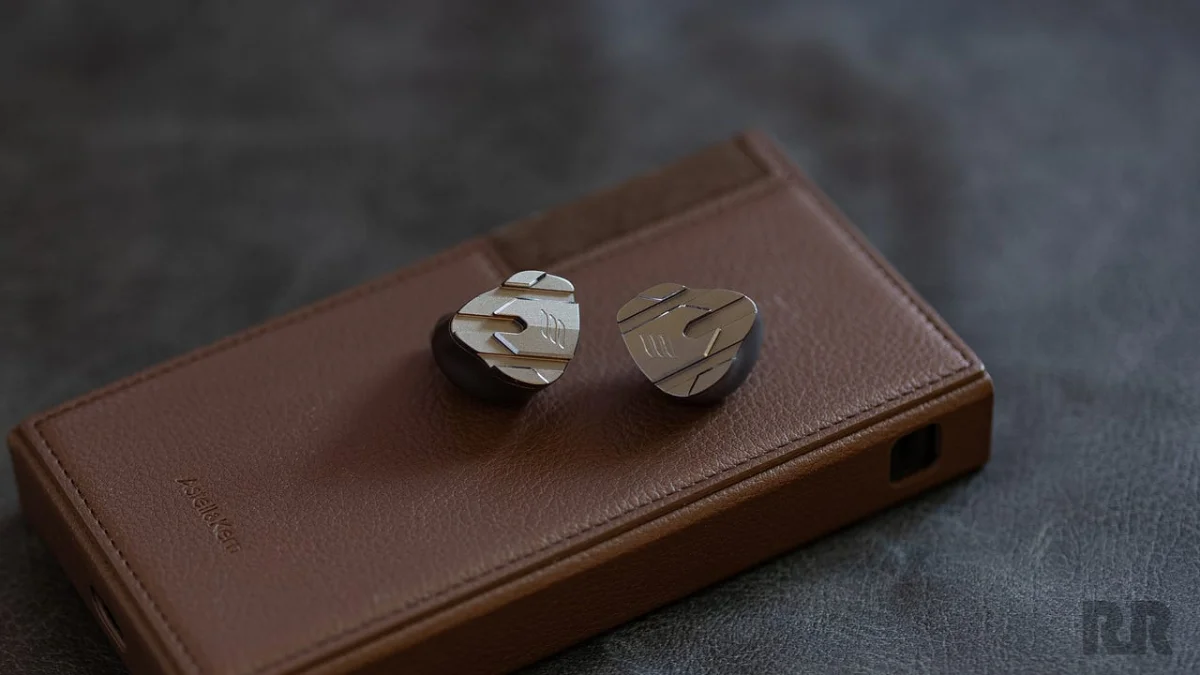
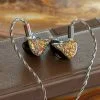
The gunmetal gray aluminum shells are nicely finished and have an angular look that sets the Perseus apart from rounder designs. The nozzles are of average length and a little slimmer than I expected for an IEM this size. They're firmly attached, and the machined retaining lips help keep ear tips from sliding off.

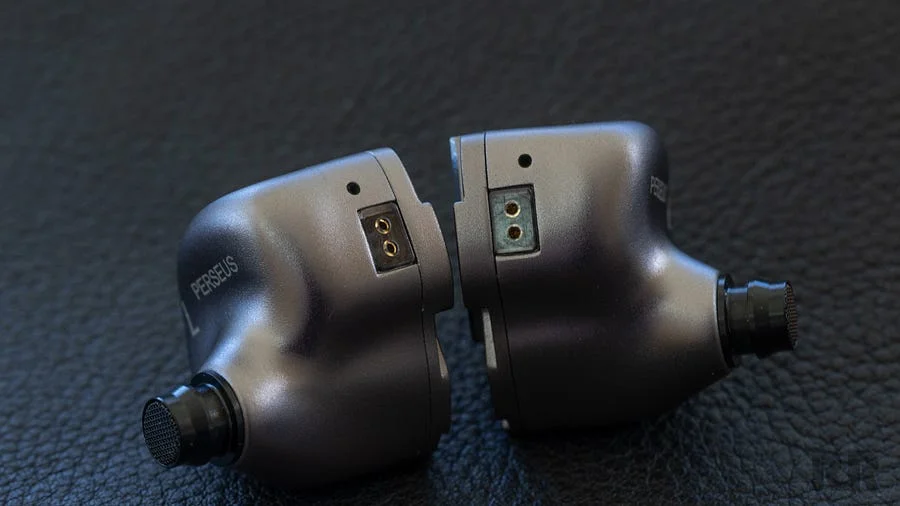
The 0.78mm 2-pin sockets are flush-mounted on top of each shell. Several aftermarket cables fit without trouble, which suggests the socket tolerances are well controlled. That matters if you plan to swap cables later, and given Effect Audio's history, you probably will.

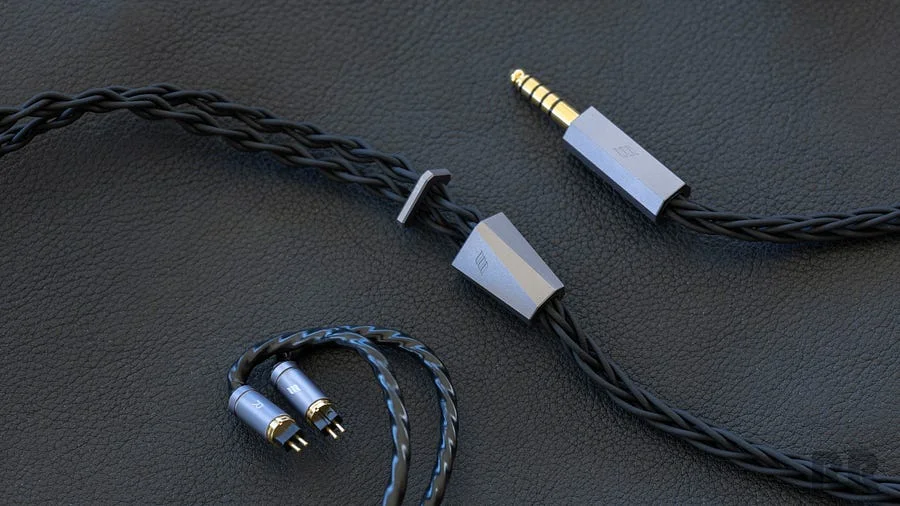
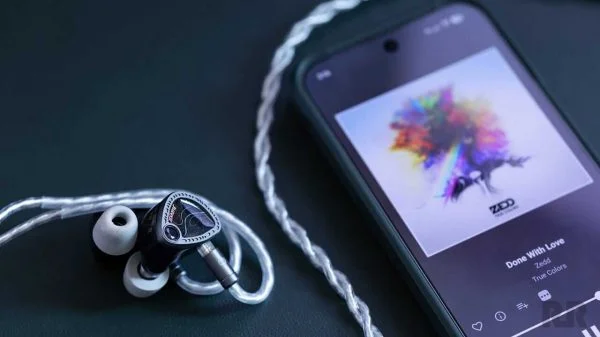
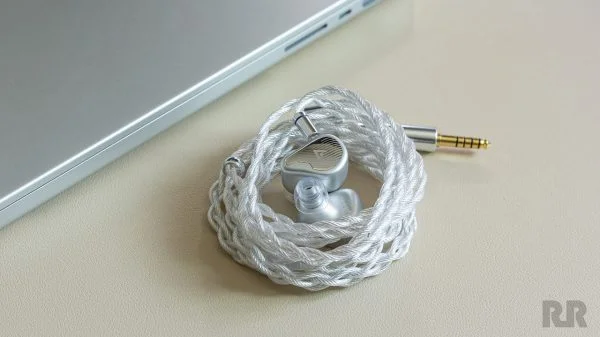
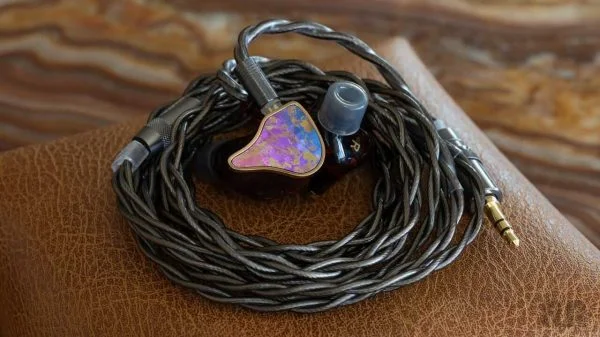
The included cable gets the most attention, as you'd expect from this company. It's an 8-conductor, 26 AWG design built with a UP-OCC manufacturing process and EA UltraFlexi insulation. The conductors combine Timeless Legacy gold-plated silver, a silver and copper alloy, copper Litz and silver Litz, around a central solid core with multi-sized core bundles. Whether those materials make an audible difference is a question of personal taste, so I won't pretend to settle it here.

What I can judge is handling. The cable feels excellent in the hand, coils neatly and looks solidly made. The downsides are real, though. It holds bends and twists more than I'd like, and above the Y-splitter it tangles easily, even when stored carefully. For a cable this expensive, that's a daily annoyance.

Comfort, accessories and the case
Comfort depends heavily on ear shape, so treat my experience as one data point. Despite their size, the Perseus shells were comfortable for me when sitting upright. I wore them for more than two hours without trouble. The included Symbio F foam tips made it easy to get a secure seal, even with my asymmetrical ears, and passive isolation was very good, with little outside noise getting through in loud settings.
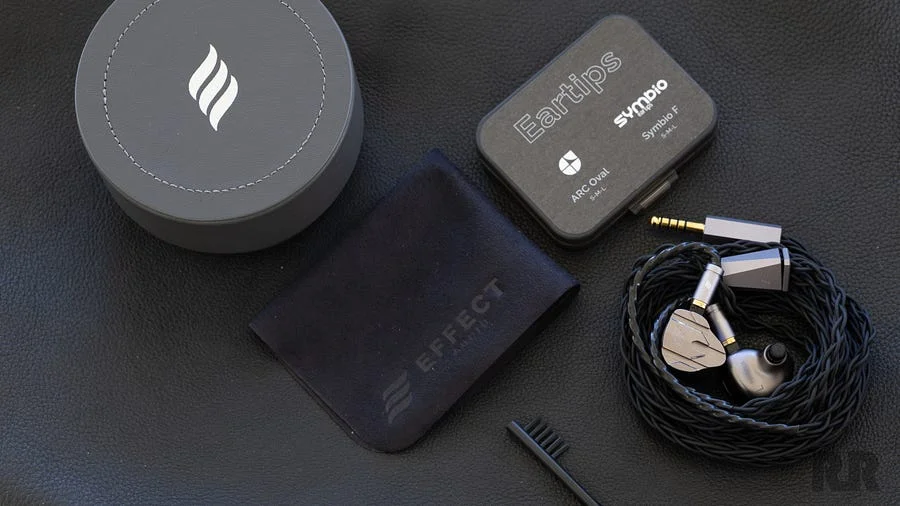
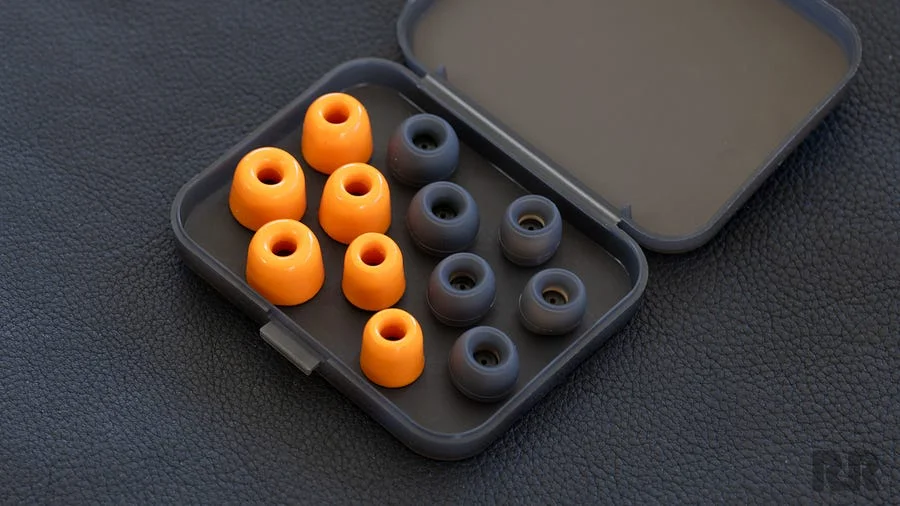
The box includes a semi-hard carrying case, three pairs of ARC Oval silicone tips, three pairs of Symbio F foam tips, an IEM cleaning tool and a microfiber cloth. I'd rather have a smaller number of good tips than a long list of mediocre ones, and this set is strong. The ARC Oval tips were a pleasant surprise, offering comfort and isolation that I didn't expect from silicone. At this price, many buyers already own a drawer of aftermarket tips, but a solid starter set still counts.

The carrying case is where the packaging falls short. Its lid depends entirely on friction to stay shut, which doesn't inspire much confidence for a $999 pair of earphones. It's also too small to fit the Perseus and its stock cable comfortably, so everything gets crammed in. The angular shells can rub against each other in storage, which risks scratches or finish wear. Campfire Audio's older IEMs show that kind of wear over time. Effect Audio doesn't include a pouch to prevent it, and that's a gap I'd expect a product at this price to fill.

I'm moving the Perseus into a Pelican 1010 case, which offers more room, a secure latch and better drop protection. That's a reasonable workaround for me, but it shouldn't be a necessary extra purchase for buyers at this level.

How it sounds
The Perseus doesn't slot neatly into one tuning category. It blends V-shaped and Harman-inspired elements into an energetic presentation, with generous bass, warm mids and extended treble that's a little relaxed. Here's the thing: that blend works well for me, but it won't suit everyone.

Treble that stays polite
The treble sits slightly behind the upper midrange but extends well beyond 10 kHz. The tweeter array doesn't push the upper frequencies forward, yet it still delivers good detail and resolution. Hi-hats and cymbals sound natural, with convincing texture and decay. On Pierce the Veil's "King for a Day," cymbal strikes hit with satisfying impact without turning sharp.

Separation holds up well in dense material, as Middle Class Rut's "I Guess You Could Say" shows. Warmer recordings can push the finest upper-frequency details back, though. Brighter instruments on Dead Poet Society's "81 Tonnes" stay well defined, but you have to listen closely to catch their subtleties. This restrained approach suits treble-sensitive listeners like me. Anyone who prefers a brighter, more forward sound may find it too polite.
A midrange I like a lot
The midrange is the Perseus's strongest asset in my view. It's slightly warmer than neutral, with natural timbre and a cohesive handoff between bass and treble. The lower mids add body and richness without muddying the picture, and vocals sit a touch forward while staying connected to the instruments around them.
Male and female vocals both benefit. On Silversun Pickups' "Little Lover's So Polite," the Perseus picks up small shifts in vocal inflection and texture even when the arrangement gets busy. Its separation of overlapping instruments is also strong. The chorus of My Chemical Romance's "Teenagers" sounds a little denser than I'd like, but the individual guitars and percussion remain distinguishable. Weezer's "Wind in Our Sail" shows the layering well, placing piano and keyboards convincingly behind the lead instruments without losing clarity.
Bass with weight and control
The bass is substantial without overwhelming the rest of the sound. Punchy mid-bass and convincing sub-bass extension suit electronic music especially well. The bass drops in Frank Ocean's "Ivy (noobody remix)" show depth and control, and INZO's "I'm Dreaming" shows the Perseus can reproduce deep, sustained bass without losing definition. The overall balance leans slightly toward mid-bass, but there's no shortage of low-end rumble.
Rock and alternative material also sounds good. The opening bass guitar on Seether's "Fallen" has excellent weight and presence, and enough texture to separate individual notes rather than blending them into a wall of low-frequency energy.
My main criticism is the attack of certain deep percussion. Compared with some competing hybrids in this price range, the Perseus can sound slightly soft around the edges, especially in faster passages. Those rivals often deliver more immediacy and definition, though they don't always match the Perseus's sense of weight and scale. If you chase the sharpest possible transients, the rounded presentation will feel like a compromise.
Against the Alien Brain and the Astru
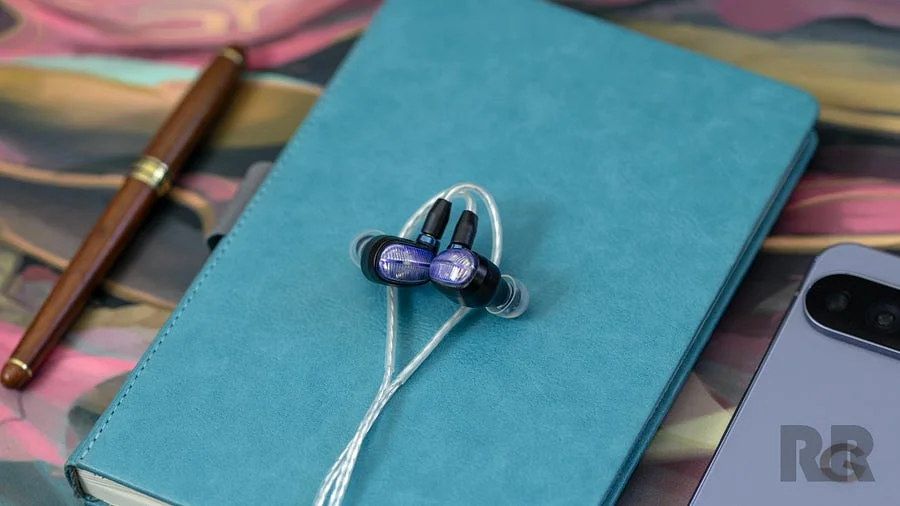
The Campfire Audio Alien Brain is the most direct rival at the same $999 price. It's a five-driver hybrid with a metal housing and transparent plastic faceplates. Campfire's accessory package is more generous, with separate 3.5mm and 4.4mm cables, a USB-C DAC and a wider range of ear tips. I still prefer the Perseus's Symbio F foam tips to most of Campfire's options, the High & Clear liquid silicone tips being the exception.
Sonically, the Alien Brain has a more mature V-shaped tuning, with less mid-bass and sub-bass emphasis. Its lower mids are cooler but still have good body, and its brighter, more extended treble picks out upper-frequency texture more readily in complex passages. The Perseus answers with more bass weight, warmer mids and smoother treble. The Alien Brain has a slight edge in transparency and instrument separation when recordings get very dense.
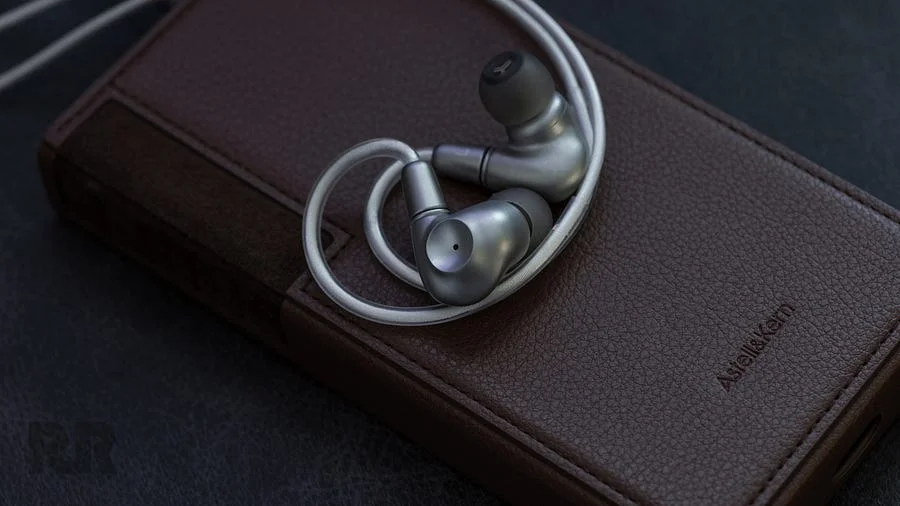
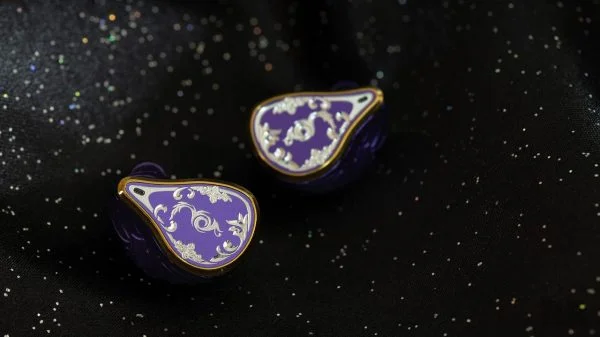
The Meze Astru is the company's flagship IEM. It uses a single 10mm dynamic driver in lightweight titanium shells and costs $899, which is $100 less than the Perseus. I found it more comfortable, though its passive isolation isn't as effective. Its accessory package is smaller, but its softer, more flexible cable is easier to manage than the Perseus's.
The Astru sounds warmer and more balanced, with less bass emphasis. Both have excellent low-frequency extension, but the Perseus offers more weight, impact and sub-bass rumble. The Astru has tighter bass transients and more precise percussion, while the Perseus gives drums a larger sense of scale. Treble extension is similar, although the Perseus has more lower-treble energy. The Astru is the smoother, less aggressive listen with better long-term comfort. The Perseus is the more energetic and immersive of the two.
Who should buy it
At $999, the Perseus enters a brutally competitive segment where small shortcomings are easy to spot. The softer edge on deep percussion, the occasionally rounded bass transients, the friction-fit case and the tangling cable all count against it at this price. Still, the Perseus gets a lot right. It delivers powerful, textured bass, natural and engaging mids, and detailed but relaxed treble.

Compared with the Alien Brain, the Perseus gives up some transparency and precision but offers more low-frequency authority and a richer tonal balance. If you want a neutral or analytical IEM, look elsewhere. If you like substantial bass, warm vocals and an energetic sound without aggressive treble, the Perseus is a compelling option. Just budget for a better case and, if you care about cable handling, consider an aftermarket alternative. Effect Audio's cable expertise is real, but the Perseus shows that a great driver array still needs a supporting package to match.
Pros
- Natural, engaging sound with a warm tonal balance
- Good treble extension without excessive brightness
- Deep, tactile bass with solid control and texture
- Rich, highly resolving midrange
- Nicely finished aluminum shells
- Strong selection of included ear tips
- Very good passive noise isolation
Cons
- Large, bulky shells may not suit smaller ears
- Treble layering and separation trail some competitors
- Reduced transparency in dense instrumental passages
- Cramped carrying case with a friction-fit lid
- No protective pouch included
- Cable holds bends and tangles above the Y-splitter