First day cover ·
IsoAcoustics GAIA-TITAN Neo Isolation Feet Reach Retail From $1,264.99 a Set
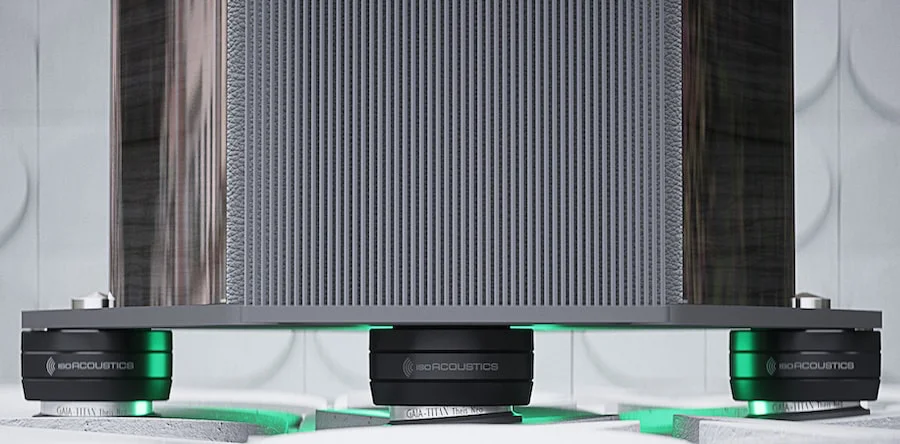
IsoAcoustics is selling its GAIA-TITAN Neo isolation feet at retail from $1,264.99 per set of four, rated for speakers up to 620 lbs, from November 6.
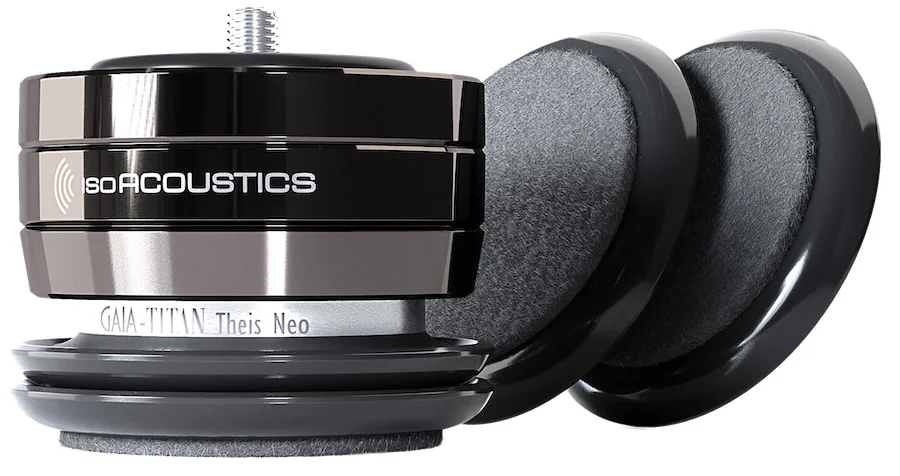
Most people spend heavily on speakers, amplifiers and cables, then set everything on the floor using whatever spikes came in the box. That's the gap IsoAcoustics has been working on for years, and its new GAIA-TITAN Neo series is the most ambitious version of that idea yet. The Canadian company's feet are built for floorstanding loudspeakers and subwoofers weighing up to 620 lbs (280 kg) per set of four.
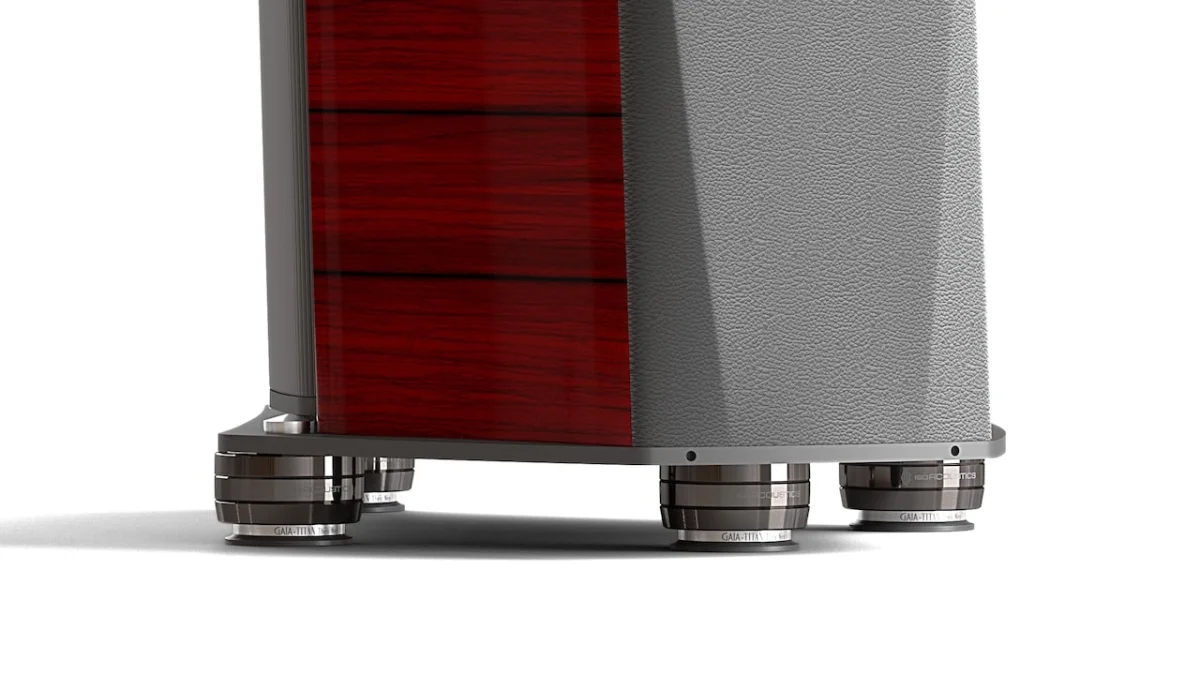
The bigger story is where this technology has already been. Isolation engineering that once arrived only as an aftermarket add-on is now built into flagship products from JBL and Marten. The retail launch means owners of existing high-mass speakers can get a version of it too. At $1,264.99 to $1,954.99 per set, this isn't a casual accessory purchase, but it's aimed at a very specific buyer.
From Flagship Speakers to Your Listening Room
IsoAcoustics first previewed the next generation of its isolation tech in May 2025. Since then, its OEM relationships have grown to include JBL, Marten and Innuos, which means the technology is moving out of the accessory aisle and into the design process for high-end audio hardware.

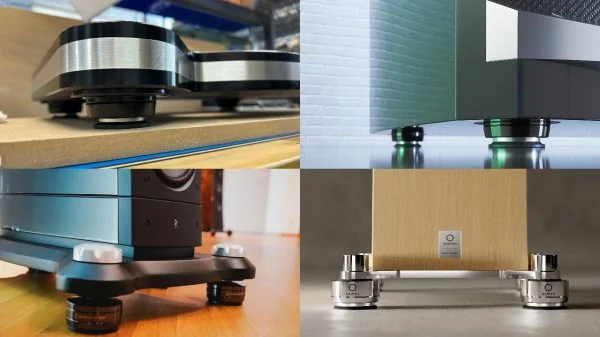
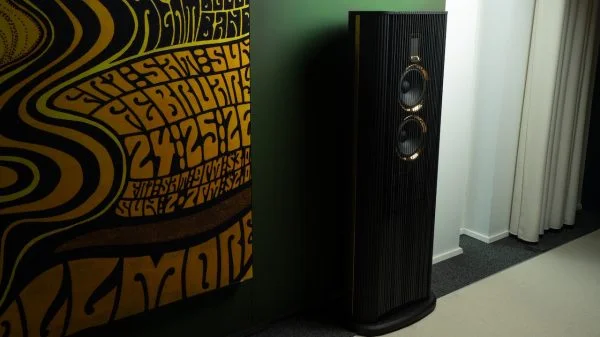
Marten has built GAIA-TITAN Neo-derived isolation into its Coltrane Supreme Extreme loudspeakers, which carry a price of €950,000. JBL took a different route, developing custom semi-recessed versions for its Summit Everest and K2 flagships, shown at HIGH END Vienna 2026. These aren't identical to the retail feet. They're manufacturer-specific implementations built on the same underlying isolation approach.
The distinction matters. When a manufacturer engineers isolation into the speaker, the owner never has to think about it. When a company sells the same principle as a separate product, the burden shifts to the buyer to get the setup right. That's the bet IsoAcoustics is making with this release.
What Changed in the Hardware
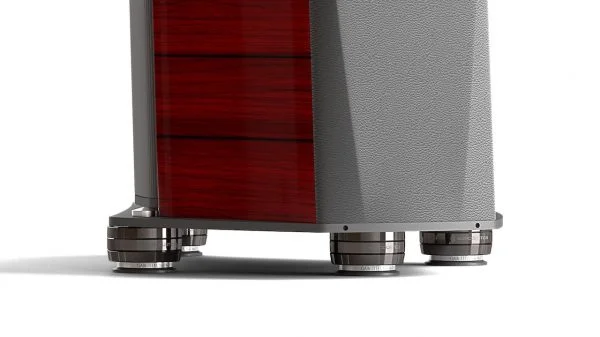
The new models don't raise the weight ceiling. The original GAIA-TITAN already handled loads up to 620 lbs. The changes are in the internal isolators and how they're put together. IsoAcoustics says it has refined the geometry, thickness, materials and durometer of those isolators to manage vibration under heavy loads. The idea is to reduce energy moving between the speaker and the floor, rather than creating the rigid mechanical link a spike provides.
The company lists five practical changes:
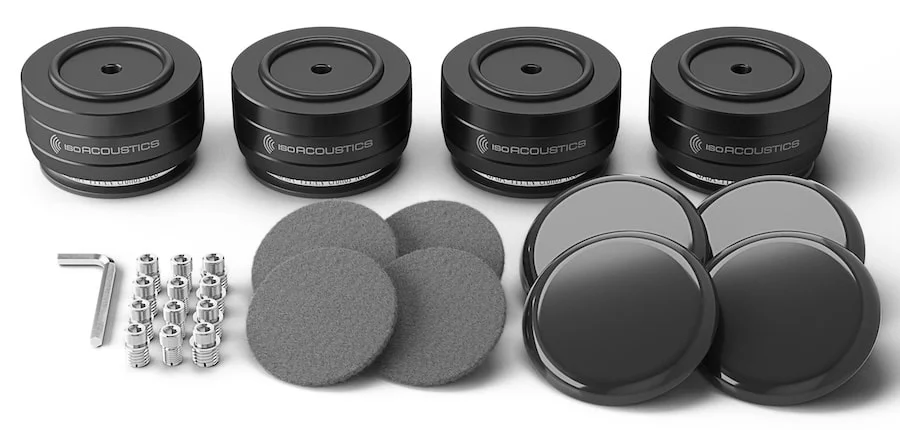
- Integrated height adjustment: Up to 0.34 inches (8.5 mm) of travel through a rotating lower ring, so you can level a heavy speaker without disturbing the isolator's alignment.
- Simpler installation: An integrated O-ring compresses as the isolator is tightened, which secures the connection while letting you rotate it into position.
- Flush-fit housing: The visible lock nut from the original design is gone, for a cleaner look under the cabinet.
- Articulating lower isolator: The contact surface pivots to accommodate slightly uneven floors.
- Included floor sliders: These help you move a heavy speaker into place. Remove them once the speaker is positioned, since IsoAcoustics says they compromise isolation.
If you've ever tried to level a 200-pound speaker on a hardwood floor without scratching it or hurting your back, the height adjustment and sliders solve a real problem. Those changes matter more day to day than any spec sheet line.

Three Models, Three Weight Classes
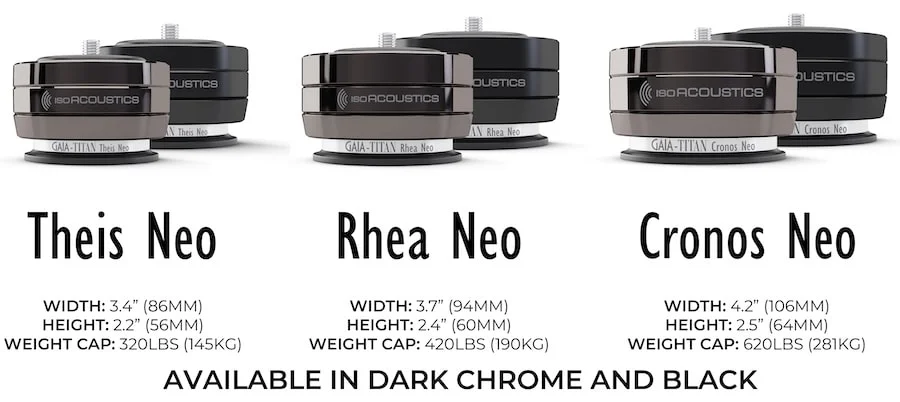
The lineup is split by load rating, and the rating applies to a complete set of four isolators rather than a single foot. Here's how the three models compare:
| Theis Neo | Rhea Neo | Cronos Neo | |
|---|---|---|---|
| Maximum supported weight | 320 lbs (145 kg) | 420 lbs (190 kg) | 620 lbs (280 kg) |
| Width | 3.4 in (86 mm) | 3.7 in (94 mm) | 4.2 in (106 mm) |
| Height | 2.2 in (56 mm) | 2.4 in (60 mm) | 2.5 in (64 mm) |
| Height adjustment | 0.34 in (8.5 mm) | 0.34 in (8.5 mm) | 0.34 in (8.5 mm) |
| Included thread sizes | 1/2″-13, M8-1.25, M14-2.0 | 1/2″-13, M8-1.25, M14-2.0 | 1/2″-13, M10-1.5, M14-2.0 |
| US price (set of four) | $1,264.99 | $1,494.99 | $1,954.99 |
All three come in black or dark chrome. Alternative thread adapters are available through IsoAcoustics distributors.
Check your mounting points before you order. The new adapters aren't interchangeable with the original GAIA series, and you need to match the model's capacity to your speaker's total weight. IsoAcoustics runs an online product selector for compatibility, and it sells optional GAIA Carpet Disks for thick-pile carpet and the GAIA F1 Speaker Jack for lifting heavy speakers during setup.
Does Isolation Actually Change the Sound?
We've tested a range of IsoAcoustics products, including the ISO-PUCK mini, Aperta stands, isolation platforms and the original GAIA series. The results have been mostly positive, but they depend on the speaker, the surface underneath and how the setup is done.
In my review of the GAIA III feet, using Q Acoustics M40, 5040 and 3050i speakers, bass definition, imaging and soundstage dimensions improved in a way I could clearly hear. The presentation opened up without the tonal balance shifting. My ISO-PUCK mini review found similar gains with bookshelf speakers on shelves and media units, though a few combinations showed a subtle change in perceived midrange warmth.
Those results are a useful starting point for the GAIA-TITAN Neo, but they don't show how the new heavyweight models compare with the original GAIA-TITAN. I haven't tested them, so the performance gap between the old and new designs remains an open question.
Isolation also has limits. It won't fix room modes, poor speaker placement or a speaker with basic design problems. Anyone who claims otherwise is probably also selling you a very expensive power cable.

Who Should Actually Buy These
The GAIA-TITAN Neo has credible engineering behind it, and the installation changes are real. That said, the new models still have to prove their advantage over the originals in a direct comparison. At these prices, my read is that they make the most sense for owners of reference-level systems who have already dealt with room acoustics and speaker placement. If your speakers are still sitting in an untreated corner, spend the money on the room first.

For those who fit that profile, the potential is compelling. Just don't buy on the strength of the technology story alone. Audition them with your own speakers and floor before committing.

Pricing and Availability
The GAIA-TITAN Neo series goes on sale worldwide on November 6, 2026, through IsoAcoustics' dealer and distributor network. Pricing by region:
- GAIA-TITAN Theis Neo: $1,264.99 (US), $1,499.99 (CA), €1,299.00 (EU), £1,099.00 (UK)
- GAIA-TITAN Rhea Neo: $1,494.99 (US), $1,799.99 (CA), €1,599.00 (EU), £1,299.00 (UK)
- GAIA-TITAN Cronos Neo: $1,954.99 (US), $2,349.99 (CA), €1,999.00 (EU), £1,699.00 (UK)
More details are at isoacoustics.com.