First day cover ·
KEF XIO Gains Wireless Rear Surrounds, But the Full Setup Gets Pricey
KEF's XIO soundbar can now drive wireless rear surrounds through a firmware update and a $199 receiver, but a complete system can reach $5,000 to $6,000.
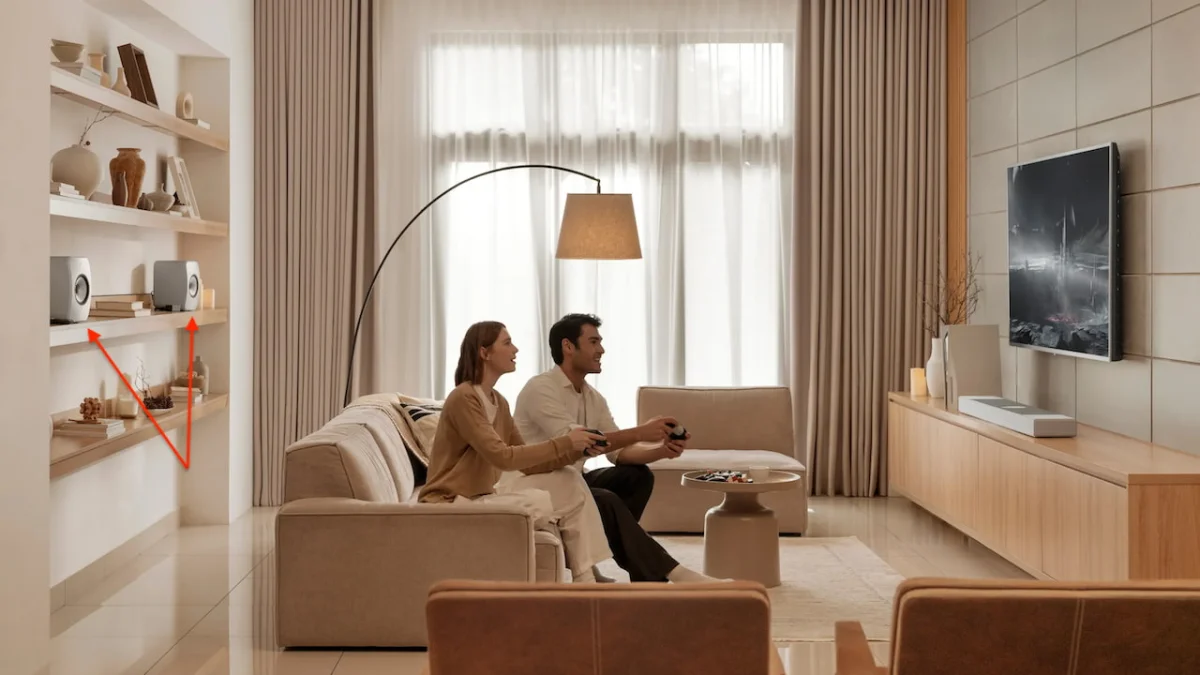
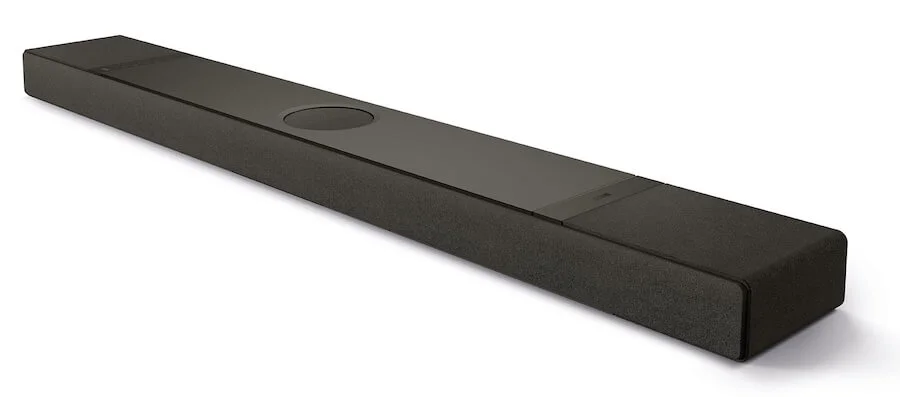
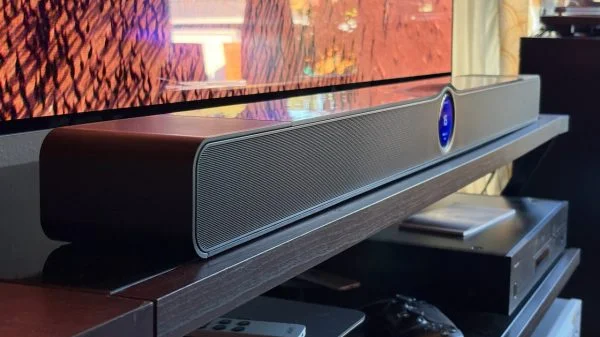
For more than a year, the KEF XIO had one obvious gap for a premium Dolby Atmos bar: no way to add real rear speakers. It could simulate surround effects, but if you wanted physical channels behind the couch, you were out of luck. That's changed. KEF has released a firmware update that lets the XIO use compatible wireless KEF speakers as rear surrounds. It's a fix that arguably should have shipped with the soundbar in July 2025, and it makes the XIO a much more flexible buy. It also makes the total cost of the system much harder to swallow.
What the update actually adds
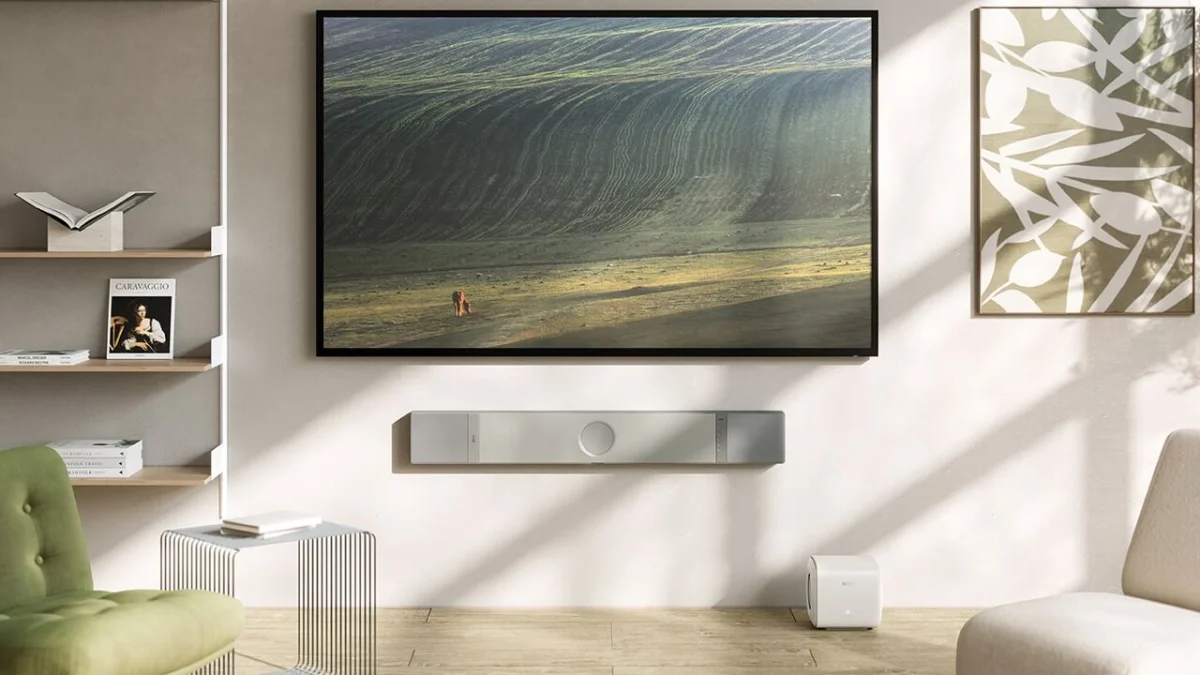
The XIO is a 5.1.2-channel design built around KEF's Uni-Q MX drivers, VECO velocity control, the Music Integrity Engine, and multiple Class D amplifiers. It already handles Dolby Atmos, DTS, and Sony 360 Reality Audio, so the new feature doesn't change the bar's core sound. What it changes is how many physical speakers you can place around the room.
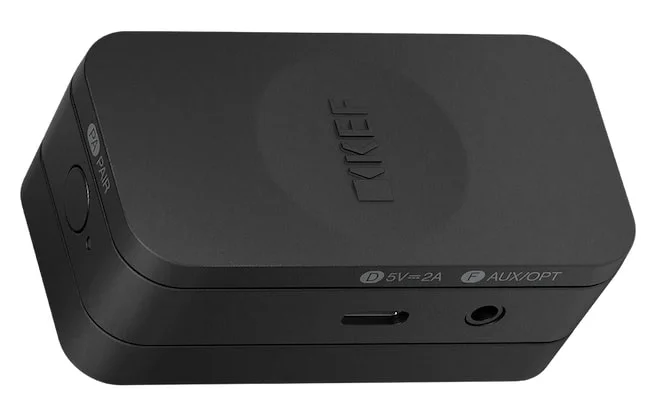
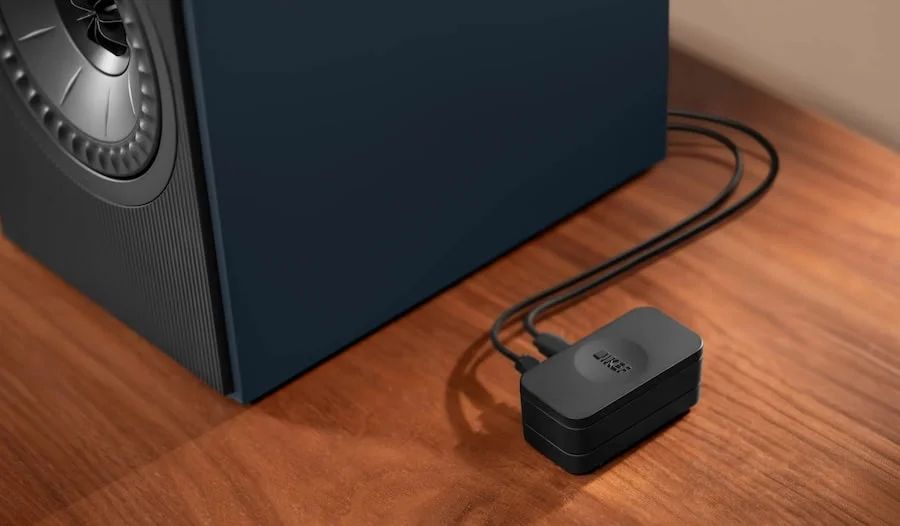
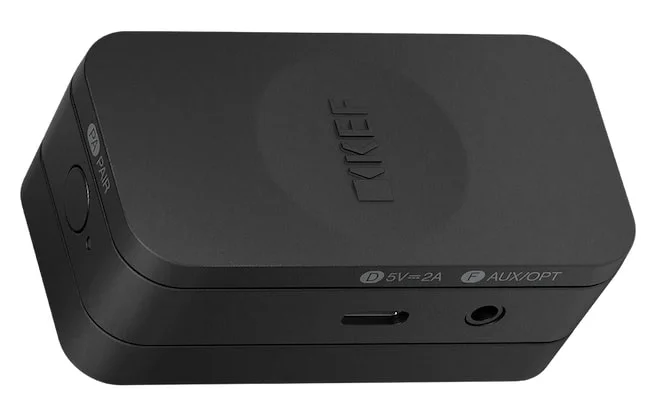
The mechanism runs through the KEF KW2 RX Receiver. KEF's subwoofer wireless link was already built on that hardware, and the update extends it to rear channels. The receiver connects to the primary speaker of the rear pair and talks to the XIO wirelessly. It's sold separately for $199 and isn't included with the soundbar. Setup and surround channel assignment happen in the KEF Connect app.
Here's the thing: the receiver's specs tell you what kind of link this is. It operates on 2.4 GHz, carries 24-bit/48kHz audio, and quotes a 57 ms latency and a maximum line-of-sight distance of 15 m from the XIO. KEF rates its signal-to-noise ratio above 80 dB and total harmonic distortion below 0.2%. Those are reasonable numbers for a dedicated speaker link. Latency matters most for lip sync, and KEF's figure is something you'll want to check in your own room with your own TV before committing.

Which speakers qualify
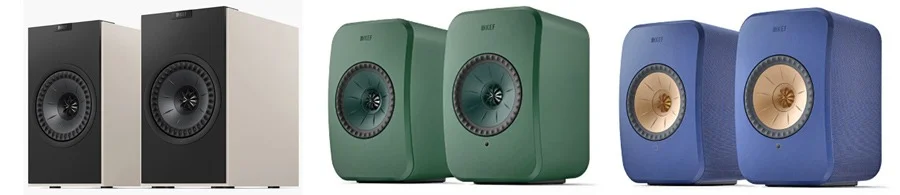
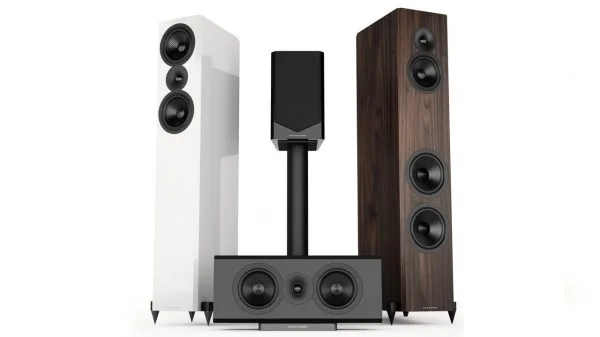
KEF's initial compatibility list covers three models: the Coda W, the LSX II, and the LSX II LT. All three are capable stereo systems in their own right, built with much of the company's driver and acoustic work. That matters for buyers. You aren't buying a speaker that only works as a surround. If you move it to a desk or a bedroom for music later, it still does its job.

The three models differ in ways that affect both placement and money:
- Coda W ($999 per pair at Amazon): the largest of the group, with a 130 mm LF/MF cone and 25 mm HF dome. It has Bluetooth 5.4 with aptX Adaptive and aptX Lossless, but no built-in Wi-Fi or Ethernet. Its primary and secondary speakers connect with USB-C.
- LSX II LT ($999 per pair): a smaller 115 mm cone and 19 mm dome with built-in Wi-Fi and Ethernet, AirPlay 2, Google Chromecast, and UPnP support. The speakers link with USB-C.
- LSX II ($1,499 per pair): the same drivers and streaming set as the LT, plus Roon Ready and a 3.5 mm input. The article notes that its two speakers can talk to each other wirelessly, which gives more placement freedom. The spec table lists an RJ45 Ethernet cable between speakers, so check the manual for your wiring.
The "no cables at all" idea doesn't quite hold. Wireless surround removes the audio run from the XIO to the back of the room, but the rear speakers still need mains power. Depending on the model, a cable may still link the two speakers in each pair. If you're hoping to hide every wire, plan for a power outlet at each rear position, and check the speaker-to-speaker connection before you buy.
Setting it up
The process is straightforward, but you'll need several firmware and app versions lined up. According to KEF's requirements as reported, you'll need:
- The XIO running firmware 1.5.160 or later, with its wireless transmitter updated to 2.0.0.0.
- Your Coda W, LSX II, or LSX II LT updated to the latest compatible firmware before you assign them as rear channels.
- The KW2 RX Receiver running firmware 2.0.0.0 or later, connected to the primary speaker of the rear pair.
- KEF Connect version 1.32.0 or later, available on iOS and Android. The app walks you through pairing, speaker assignment, and surround channel configuration.
- The rear pair placed behind or to the sides of your main listening position, then configured in the app.
Skipping the updates is the most likely way to hit a wall. Pairing problems are almost always version mismatches, so update every device before you start.

The XIO's other features
The update sits on top of a bar that already had plenty going for it. The XIO uses Intelligent Placement Technology to analyze nearby surfaces and objects and adjust its output automatically. A Dialogue Mode raises voices without forcing you to ride the volume.
Bass comes from four P185 drivers that borrow technology from KEF's KC62 and KC92 subwoofers, including P-Flex surrounds and a force-cancelling arrangement. If you want more low-end impact, you can add an external subwoofer by RCA or wirelessly with the KW2 RX. KEF's stated maximum SPL is 102 dB at 1 m, with a frequency response of 34 Hz to 20 kHz at ±3 dB.
Connectivity covers HDMI 2.1 eARC, optical, Ethernet, Bluetooth 5.3, AirPlay 2, and Google Cast. Streaming options include Spotify Connect, TIDAL Connect, Amazon Music, Qobuz, and others through the KEF Connect app. Maximum resolution is 192 kHz/24-bit over eARC, 384 kHz/24-bit over the network, and 96 kHz/24-bit over optical.
Where the money goes
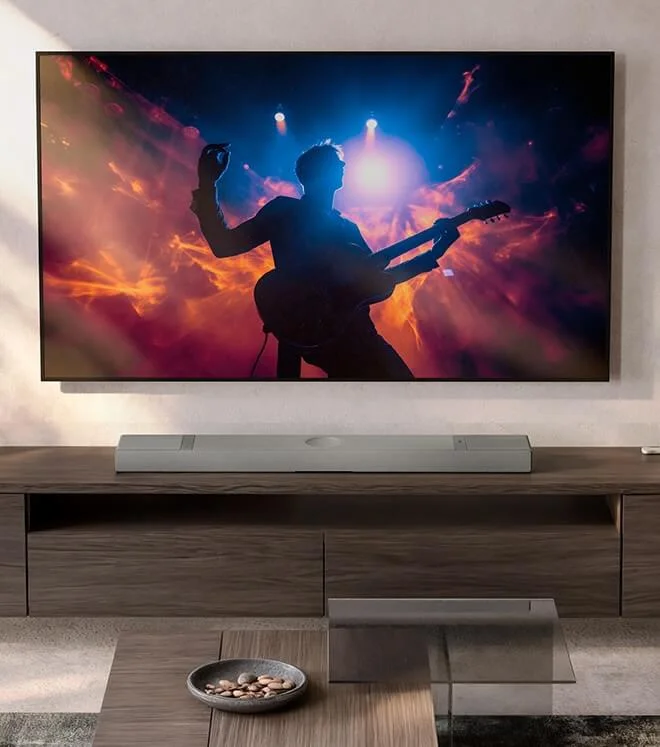
This is the catch. The XIO lists at $2,499 on its own. Add a pair of rear speakers at $999 to $1,499, plus the $199 KW2 RX Receiver, and you're in the $3,700 to $4,200 range before any subwoofer. Include a KC62 at $1,699 or a KC92 at $2,499 and the total climbs quickly. Based on the figures in the source, a complete XIO system with rear speakers, a subwoofer, and receiver hardware can run roughly $5,000 to $6,000.
That's a lot of money for a soundbar setup, and the comparison set is crowded. The Nakamichi Dragon 11.1.6 offers dedicated surrounds and a substantial subwoofer for about $2,588. The Samsung HW-Q990H delivers an 11.1.4-channel package for around $1,600. Sony's BRAVIA Theatre Quad, paired with a compatible subwoofer, is another alternative, though it takes a different approach to surround reproduction.
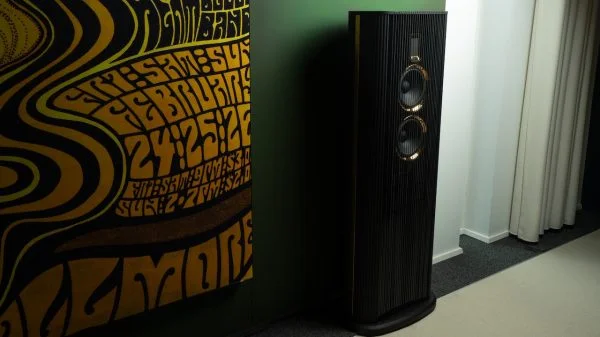
At this price, I'd also weigh a midrange AV receiver, passive speakers, and a powered subwoofer. That route costs more time and cable, but it can deliver stronger performance and far more room to upgrade later. KEF deserves credit for closing the XIO's most obvious gap. Making the bar more expandable doesn't automatically make it better value, though.
Who should care
Existing KEF wireless speaker owners stand to gain the most. If you already have an LSX II or Coda W sitting in a living room, the XIO's rear channel support turns those speakers into a surround system without buying a second set of anything. Those speakers also keep their value as stereo speakers if you later drop the soundbar setup.
For newcomers, the decision is harder. You're paying premium prices for a flexible system that starts at the soundbar and grows from there. If you don't already want rear speakers, or if your room can't fit them, the XIO is a strong front-channel bar with a feature that's now finally complete. If you do want the full setup, go in with the total cost on paper, not just the $2,499 headline figure.
Price and availability
- KEF XIO Soundbar: $2,499 at Amazon
- KW2 RX Receiver: $199 at Amazon
- Coda W: $999 per pair at Amazon
- LSX II LT: $999 per pair at Amazon
- LSX II: $1,499 per pair at Amazon
- KC62 Subwoofer: $1,699 at Amazon
- KC92 Subwoofer: $2,499 at Amazon