First day cover ·
Apple TV 4K (2026) Review Roundup: Faster Chip, Hands-Free Siri, Steep $299 Price
Apple's $299 Apple TV 4K adds a faster A19 chip and hands-free Siri, but reviewers say its missing home theater features make the upgrade hard to justify.
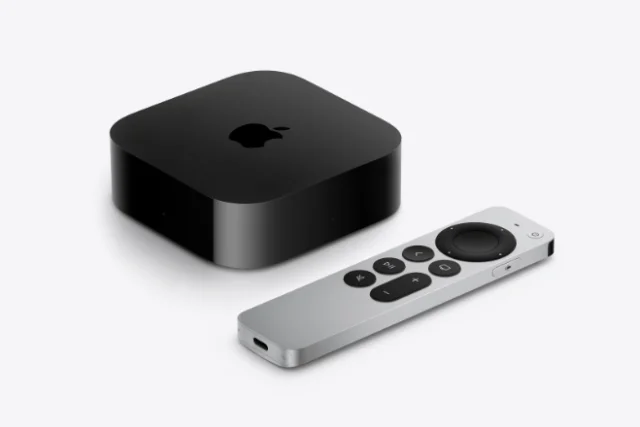
Apple's fourth-generation Apple TV 4K is a meaningful hardware step, but its $299 price is doing most of the talking. The box is faster, adds microphones so you can talk to it from the couch, and ties into the HomePod lineup in ways earlier models couldn't. Whether that's worth the money depends almost entirely on how deep you already are in Apple's ecosystem and what you expect a streamer to do.

Apple announced the device on October 13, 2026, at its "Welcome Home" event, with shipping set for November 13. Early coverage from The Verge, TechCrunch, CNET and Engadget points to the same split: the engineering is welcome, and the price is hard to swallow.
What's under the hood
The new box runs an A19, the same chip found in the iPhone 17. Apple says it delivers up to 50% faster CPU performance and twice the GPU speed of the A15 Bionic in the previous model. Those are Apple's figures, not independent benchmarks, but a generational jump of that size would be noticeable in menus, app launches and anything that leans on the graphics processor.
The more practical change may be the dedicated AV1 decoder. AV1 is a video codec that compresses footage more efficiently than older standards, so the same picture quality can travel over a connection with less data. Handling it in dedicated silicon generally means smoother playback at lower power and less heat. Apple says the decoder helps with services that support AV1, with Netflix cited as an example. If your favorite apps don't use AV1, you won't feel this one.
Connectivity got a refresh too. The box adds Wi-Fi 7, Bluetooth 6 and standard Gigabit Ethernet. Wired Ethernet is still the most reliable option for a streamer, so it's a sensible addition for anyone whose router sits far from the TV. Storage now starts at 128GB, with the cheaper 64GB Wi-Fi-only variant gone. For streaming alone that's more than most people need, but it's a notable change for buyers who relied on the lower entry point.
Siri without the remote
The three far-field microphones are the headline feature for many buyers. They let you say "Hey Siri" or "Siri" from the couch without picking up the remote or relying on a paired HomePod. In Engadget's hands-on time, the mics worked reliably in a quiet demo room. Voice has been a gimmick on TV hardware for years, so a working mic array that doesn't need a second device is a real step forward.

Siri's replies appear as on-screen text rather than spoken audio. That choice makes sense. A spoken answer would fight with whatever is playing, and reading a short line of text is far less disruptive. Siri AI launches in beta on the new hardware and is also coming to earlier Apple TV 4K models through a software update. Apple hasn't locked in a rollout schedule for that update in the coverage so far, so it's worth watching if you own an older box.
The refreshed Siri Remote adds Find My support with Precision Finding, which lets you locate it through an iPhone. It also includes a speaker that plays a tone when you ask Siri to find it. Anyone who has dug a remote out of a sofa will see the appeal immediately. It's a small feature with an obvious, everyday payoff.
The HomePod connection
The box supports a four-speaker surround setup built from matching pairs of second-generation HomePods or HomePod mini 2s, with automatic room calibration. That's the most interesting angle for Apple loyalists. If you already own HomePods, the Apple TV becomes a hub for a surround system without a traditional receiver. If you don't, the cost of entry climbs quickly, and the math gets harder to justify on this device alone.
What's missing
This is where the reviews turn critical. The Verge's senior TV and audio reviewer argued that four years of waiting produced a box that still lacks several features home theater enthusiasts have requested. Those include 4K/120Hz output, which matters for gaming through tools like Moonlight, audio passthrough to AV receivers, an HDMI input, and digital optical out.
Each omission affects a different group. Passthrough matters if you run a receiver that handles Dolby or DTS decoding. An HDMI input lets you route a cable box or console through the Apple TV. Optical out is the connection many older soundbars still rely on. And 120Hz output is the one that matters for high-refresh displays. Leaving these out is a choice, and it'll frustrate the people who would otherwise be the most enthusiastic buyers.
The price problem
At $299, the Apple TV 4K costs more than double the 2022 model's original starting price, and The Verge puts it roughly $200 above a Roku Ultra. It's also several times the cost of basic streamers. That gap creates an awkward position. The box is polished and capable, especially for people who want hands-free voice control or multi-HomePod audio. For someone who only wants apps and a remote, it's hard to recommend when cheaper options handle streaming well.
CNET and Engadget reached similar conclusions. They called the faster chip and microphones welcome, but said the price jump is tough to justify for most buyers unless the new voice or audio features are a priority. The Verge also noted that the previous model remains fast, which undercuts the case for an immediate upgrade.
Who should pay attention
I'd put buyers in three rough groups. If you own several HomePods and want Siri on the TV, this is the most complete Apple option yet, and the surround support is a genuine draw. If you mainly stream and already own a working Apple TV, the performance and mic gains probably won't change your day-to-day experience enough to justify the cost. If you're building a home theater around a receiver, the missing passthrough and HDMI input are likely dealbreakers.
The fuller picture should arrive once review units reach testers after the November 13 shipping date. The questions I'll be watching are how the Siri AI beta matures, whether the software update reaches older hardware on a clear timeline, and whether Apple ever adds the ports and output options that critics keep asking for.