First day cover ·
14-inch MacBook Pro with M6: What the Upgrade Means for Buyers
Apple's 14-inch MacBook Pro with M6 pairs faster graphics and AI with up to 24 hours of battery life. Pre-orders open October 28, with sales from November 6.
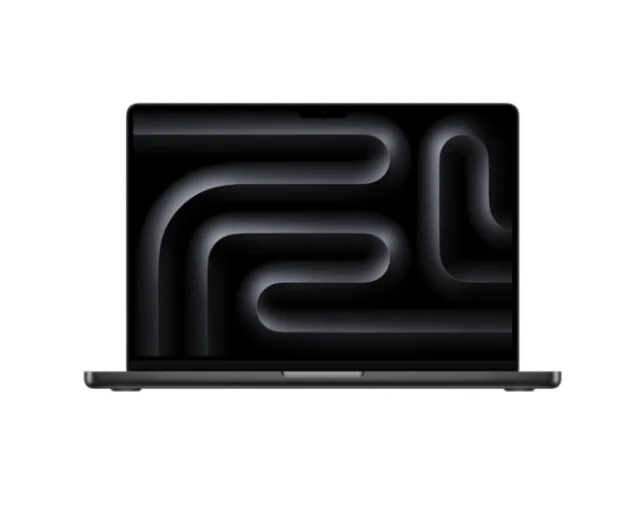
Apple's new 14-inch MacBook Pro with M6 is aimed at a wide group: college students, business users, creators and developers who want a laptop that handles heavy work without a desktop on the desk. The headline is the M6 chip, but the more useful question is who should upgrade and from what. The answer depends a lot on whether you're coming from an M1 or an Intel machine, because Apple's comparisons get much bigger the further back you go.
The M6 chip and where the speed gains land
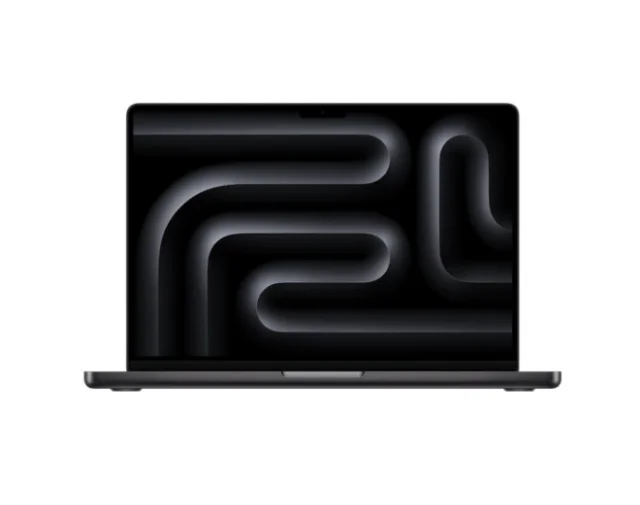
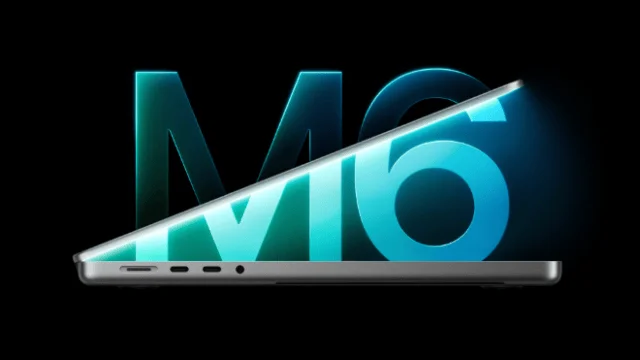
M6 gets a 12-core CPU, which Apple says adds two cores over the previous generation. The 12-core GPU also gains two cores, and Apple claims up to 30 percent faster graphics than M5. Apple also says the CPU includes the world's fastest CPU core, a claim that's worth checking against independent testing once reviewers get hardware in hand.

The GPU carries a third-generation ray-tracing engine and Dynamic Caching, which Apple says helps optimize on-chip memory. For creative work, that's the part that matters most: 3D modeling, photo editing and gaming should all benefit. Memory is 16GB as standard, configurable up to 32GB, with bandwidth of up to 170GB/s. That bandwidth figure is the kind of number that matters more under sustained load than in a spec sheet, so it's worth watching how it translates into real sessions.
Apple's own comparison figures are where the detail sits. Against the 14-inch M5, it lists these gains:
- Up to 1.3x faster time to first token for LLM prompt processing
- Up to 1.3x faster ray-traced rendering in Blender
- Up to 1.2x faster image processing in Affinity
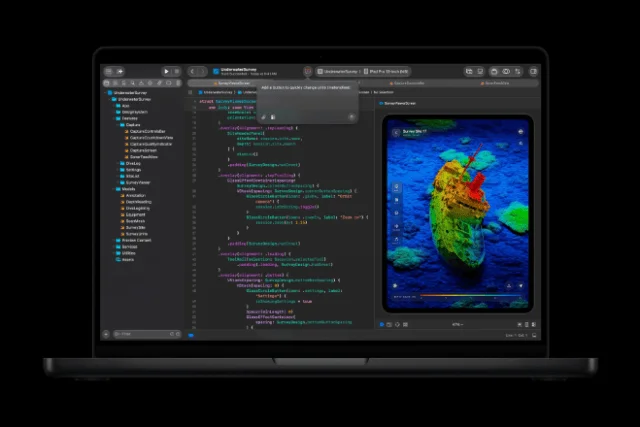
- Up to 1.3x faster project builds when compiling in Xcode
Against the 13-inch M1 model, the same tests come out to up to 13x, 11.7x, 3.3x and 2.5x. Those are the numbers that make the upgrade case for older machines, but they compare against an older base, so they overstate what someone moving from M5 will notice. The M5-to-M6 gap is more modest, and it's the one that matters if you bought last year.
On-device AI is the bigger story
The 12-core GPU includes Neural Accelerators in each core, and M6 pairs that with a Dual 16-core Neural Engine. Apple says the Neural Engine runs up to 1.9x faster than M5 and speeds up workloads such as image generation, Super Resolution and AI upscaling. Apple also claims up to 25 percent faster on-device AI performance than M5 for tasks such as LLM prompt processing.
The practical pitch is running large language models locally. Apple says that approach keeps data on the machine, which is a real draw for people who don't want their prompts sent to a server. Apple Intelligence and Siri AI are built into the system, so the same hardware handles assistant features and heavier local models. Whether a given model runs well will depend on the software and how much memory it needs, so 16GB versus 32GB is worth thinking about if local AI is central to your work.


Battery life, display and the rest of the spec sheet
Apple rates battery life at up to 24 hours, which it calls the longest ever in a Mac. It also says performance stays the same whether the laptop is plugged in or running on battery, which is worth testing, since many laptops throttle off the wall. For Intel-based upgraders, Apple says battery life improves by up to 14 additional hours. M1 owners get up to four more hours.
Fast charging reaches 50 percent in about 30 minutes when paired with a compatible higher-wattage USB-C adapter, such as the 96W Power Adapter. The Liquid Retina XDR display is rated at up to 1600 nits peak HDR brightness and a 1,000,000:1 contrast ratio. A nano-texture option is available for people who work in bright rooms and want less glare.
Connectivity moves to Wi-Fi 7 and Bluetooth 6, and the laptop supports up to two external displays. The port selection is HDMI, MagSafe 3, three Thunderbolt 4 ports, an SDXC card slot and a headphone jack. That covers most of what photographers and video editors plug in. Apple says M1 and Intel users also gain an extra Thunderbolt port compared with their current machines.


For video calls, there's a 12MP Center Stage camera with Desk View, a three-mic array and a six-speaker sound system with Spatial Audio. Apple's pitch is that the webcam and audio are good enough for daily meetings without an external kit. Space black gets an anodized finish with a seal that Apple says resists fingerprints. The laptop also comes in silver.
Apple also points to Continuity. Users can share files, hand off tasks and control their iPhone from the Mac. People switching from iPhone to Mac for the first time can move settings, files, photos and passwords across in one step.
macOS 27 and what software adds
The laptop ships with macOS 27, and much of the new software experience depends on it. Siri AI is positioned as a more conversational assistant that can draw on personal context across messages, emails and photos. It's integrated into Spotlight and system context menus, and Visual Intelligence lets users ask about what's on screen with a keyboard shortcut. Apple says Siri can also help users write and edit almost anywhere they type.

Apple Intelligence reaches into individual apps. In Safari, it can group open tabs by topic, notify users about website changes such as restocks or price drops, and build custom extensions from a written description. Shortcuts can create automations from a plain-language description, and the Photos app adds intelligent editing tools. Apple also gives users a Liquid Glass slider in Settings, running from ultraclear to fully tinted. My read is that the slider is a small but useful concession to people who found the earlier glass look hard to read.
Environmental and build claims
Apple says the new model contains 45 percent recycled content overall. The enclosure is 100 percent recycled aluminum, the battery uses 100 percent recycled cobalt, and multiple capacitors use 100 percent recycled tantalum, which Apple describes as a first for the company. Apple says it manufactures with 60 percent renewable electricity across the supply chain, and it reports that the packaging is 100 percent fiber-based. The company ties these steps to its goal of being carbon neutral across its footprint by 2030. Apple also says the laptop is designed to be durable and repairable.
Pricing, availability and who should buy
The 14-inch MacBook Pro with M6 starts at $1,999 in the U.S., or $1,899 with education savings. Pre-orders open October 28 at apple.com/store and in the Apple Store app in 35 countries and regions, including the U.S. Units begin arriving November 6 at Apple Store locations and at retailers that sell Apple hardware. Full specifications and configuration options are listed at apple.com/macbook-pro.
For U.S. customers, Apple Upgrade leases the laptop from $38.99 a month for 36 months, excluding taxes and any trade-in credit. Apple Trade In offers credit toward a new Mac, and value can be checked at apple.com/shop/trade-in. Apple Card holders can pay in monthly installments at 0 percent APR and receive 3 percent Daily Cash back up front. AppleCare+ and AppleCare One cover accidents, theft and loss on eligible products, and battery replacement, and AppleCare One Family extends coverage across a Family Sharing group in the U.S.
Here's the thing: the decision really comes down to where you're starting. If you're on an M1 or Intel Mac, the battery, memory and connectivity jumps are substantial and easy to feel day to day. If you bought an M5 model, the M6 improvements are real but more incremental, and the case rests on local AI and efficiency. Independent reviews will show how much of Apple's claimed gap holds up in sustained workloads, and that's the test I'd wait for before deciding.