First day cover ·
Plug-in solar looks promising, but pro installation still wins on safety and yield
Testing a battery-integrated plug-in solar unit on a garden office roof suggests professional fitting still matters for panel placement, safety switching and metering.

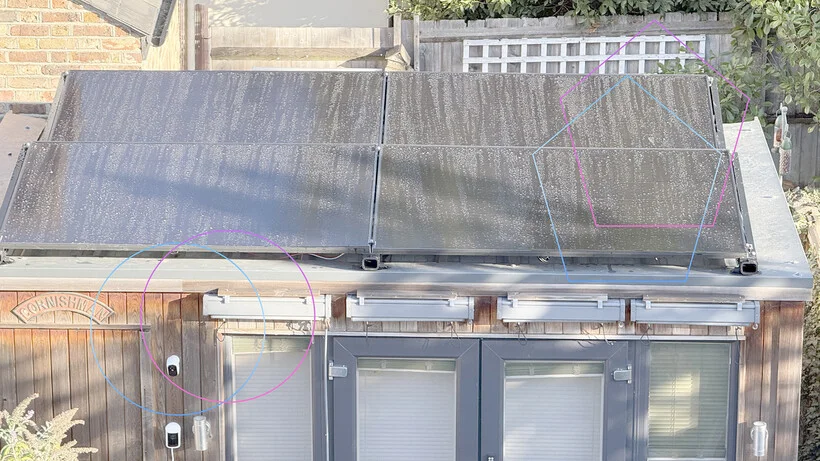
The Anker SOLIX Solarbank 4 Pro combines a battery and inverter in one unit, and that integration is exactly why it can't be self-installed in the UK right now. Because it contains a battery, it falls outside what current UK rules allow a homeowner to fit alone. That's expected to change, and the Solarbank 4 Pro looks like a useful preview of the plug-in systems that could arrive from next year.
I had mine installed professionally with four panels on the roof of a garden office. I already run a full roof-mounted solar system, so this setup wasn't about replacing anything. I wanted an installation close to what a keen DIYer might attempt, and living with it has changed my view on which parts of the job should be left to a pro.
Placement decides how much you generate
A professional survey gives you a quote built on the number and type of panels and where they'll sit. That quote estimates how much power you can realistically expect, which lets you judge whether the chosen spot is worth using at all. Without it, you're guessing.
Alignment is the next hurdle. Getting panels angled correctly on a flat roof or in a garden is harder than it looks, and small errors in tilt and orientation eat into the output you were hoping for. I'd rather have someone who does this every week handle it. For any installation, the mounting also needs to hold up in high winds, so the fixings matter as much as the angle.
There's a more modest case where DIY makes sense. A sunny balcony with a couple of lightweight panels is a far simpler job, with fewer variables to get wrong. Before doing it, though, check that your lease permits it and that you're confident you can secure the panels properly.
Isolation is the part people skip
Panels produce power whenever there's daylight, which means the system is live long before you think about switching anything off. A professional installation includes cut-off switches that let you isolate the panels and the inverter/battery. That's what lets you shut things down safely if something goes wrong, or when you need to work on the system, such as adding a second battery later.
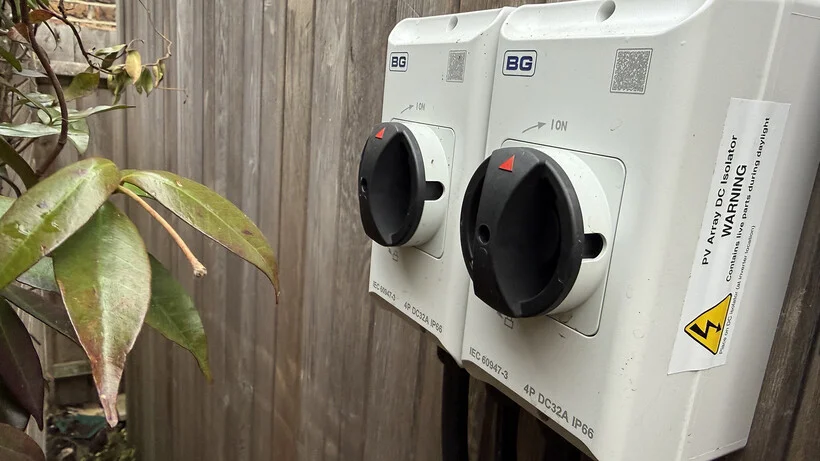
Wiring is the other half of this. A professional job should leave the cabling correctly routed and protected. A DIY installation, in my experience of how these jobs usually go, often skips the cut-off switches entirely, which leaves the cables from the panels permanently live. That's the detail I'd want someone accountable for, not a shortcut I'd take myself.
You'll need a smart meter, and probably an electrician
The Solarbank 4 Pro's clever trick is load balancing. It charges the battery when there's surplus solar and feeds power back when household demand rises. To do that, it needs a smart meter that tracks both what the house is using and what the roof system is producing. In my setup, the battery charges itself when there's enough sun and delivers up to 2500W when the house is drawing heavily.
Fitting the smart meter meant shifting things around in the consumer unit, and that's a job I'd hand to a qualified electrician without a second thought. Even if you're confident with other DIY tasks, this is where a mistake carries real risk, so it's the clearest line I'd draw.
DIY isn't off the table, but it's not plug-and-go
Nothing I've seen suggests self-installation is a bad idea in principle. The trouble is that the marketing shorthand of plugging in a few panels and walking away skips over the questions that determine whether the system pays off. How much sun will the spot actually get? How many panels will fit? What will the output be? Is your existing wiring up to the job? If you can't answer those with confidence, bring in a professional before you buy anything.
When the installation is done properly, the results can be striking. During a week-long August holiday, when there was plenty of sunlight and the house was empty, I used around 28kWh of power. Later in October, with fewer daylight hours (though still some sunny days), the same kind of week came in at just over 14kWh. That's almost half, and it shows how strongly the season shapes what a system can deliver.
My read is that plug-in solar will be a real option for more households once the rules catch up. But for now, the sensible split is clear: the panel layout, the safety switching and the metering belong with a pro, and the simple balcony setup is where a confident DIYer can reasonably take the lead.