First day cover ·
Woodpeckers Paolini Pocket Rule Doubles as a Marking Gauge and Height Gauge
Woodpeckers' Paolini Pocket Rule locks its stop anywhere on the blade and turns into a marking gauge and height gauge. Prices start at $34.99 direct.
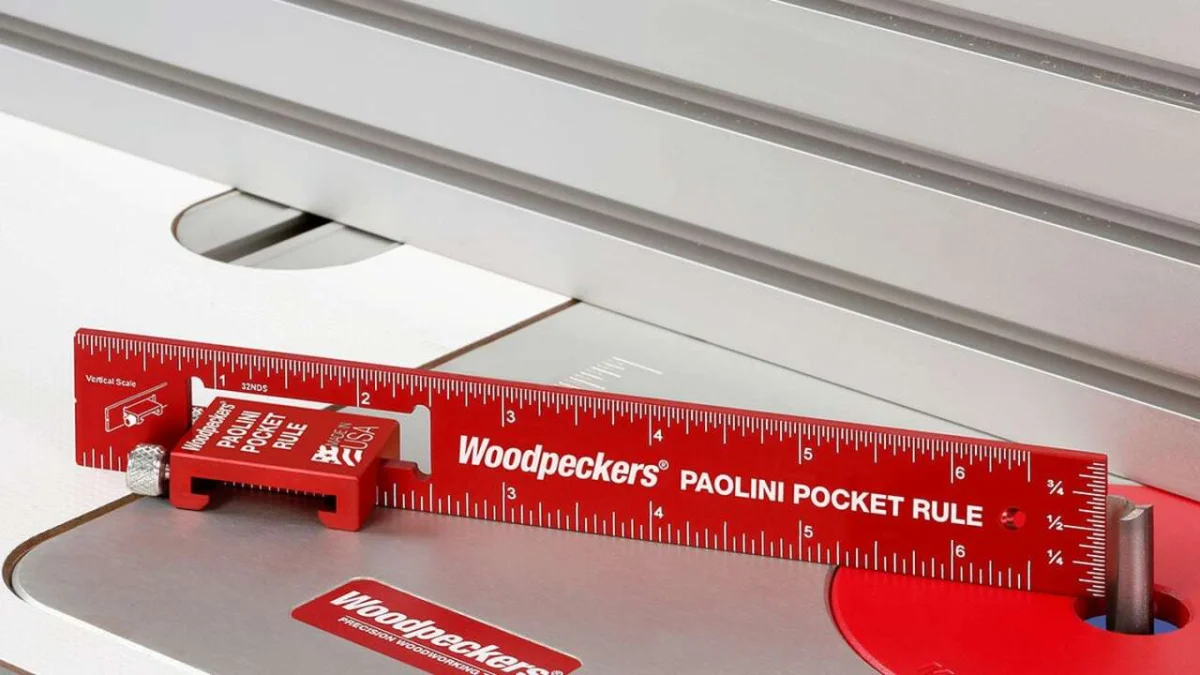
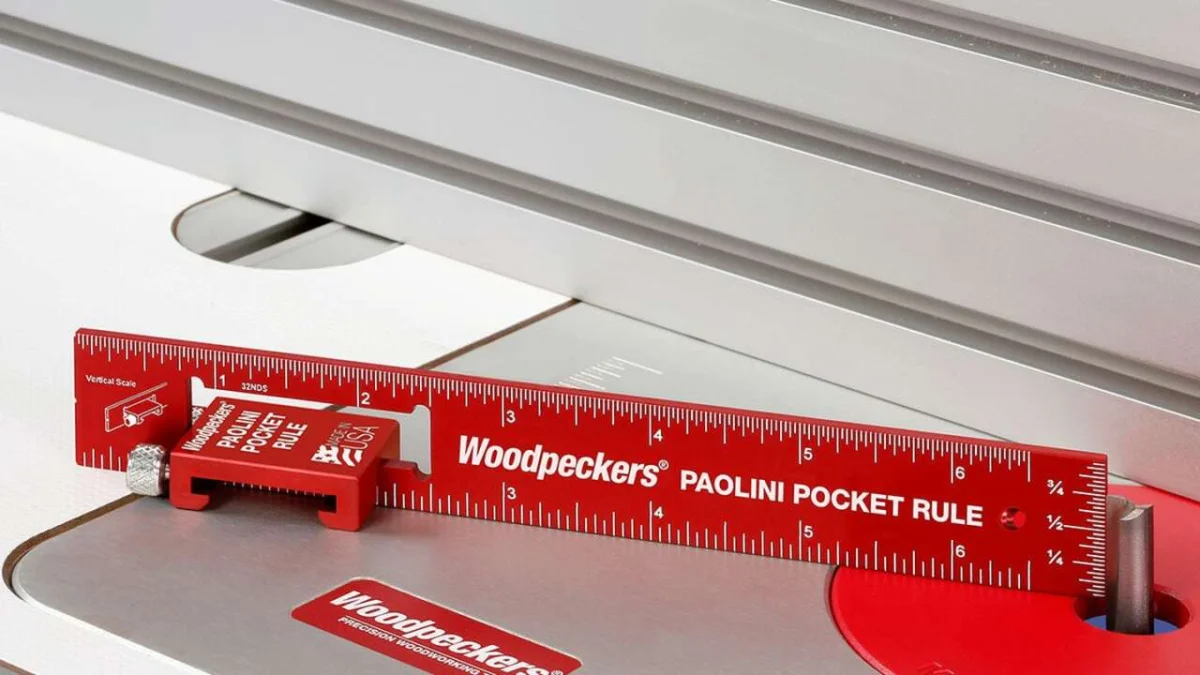
Most pocket rules do one job. You grab one for a quick length, then put it back in the apron. Woodpeckers' Paolini Pocket Rule is trying to do three jobs from the same strip of metal, and the reason it works comes down to one part: a sliding stop that locks anywhere along the blade. Everything else the rule does depends on that stop holding its position.
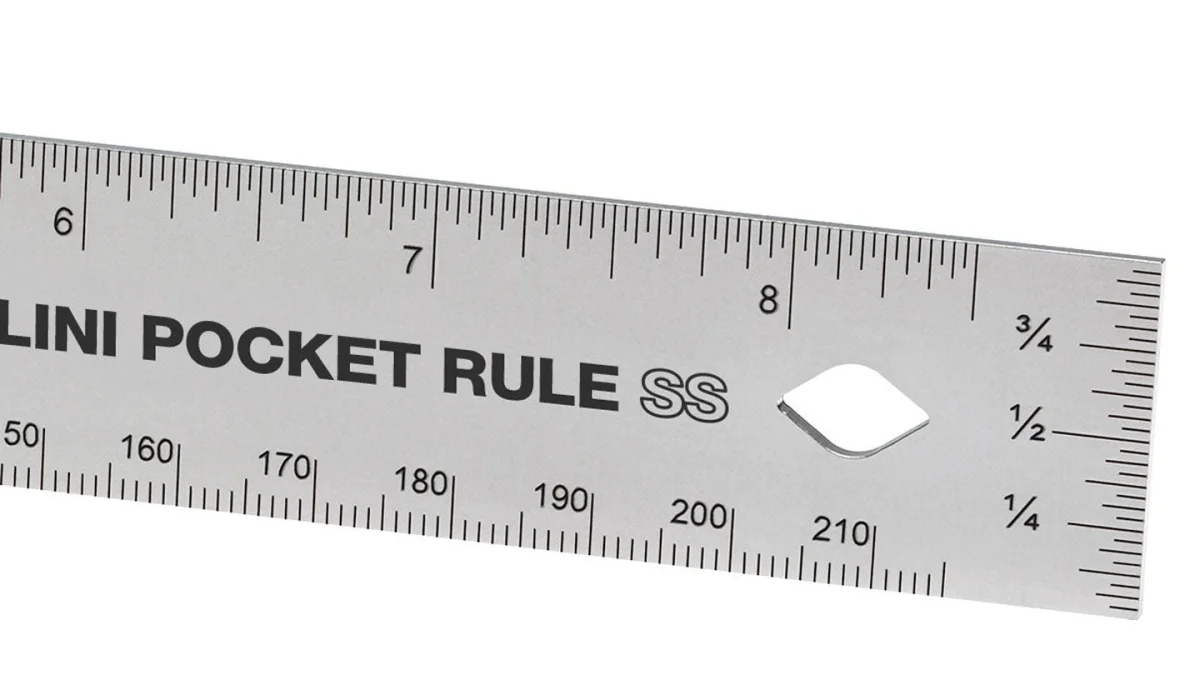
Greg Paolini designed the rule with Woodpeckers, and the company machines and inspects every one at its factory in Strongsville, Ohio. Each blade is exactly 1 inch wide. You can get it in red anodized aluminum at 1/8 inch thick or stainless steel at 1/16 inch thick, and the aluminum version carries white laser-engraved scales. Lengths run 6, 8, and 12 inches, with inch-only, metric-only, and inch-and-metric combo graduations across the line.
The stop is the whole idea
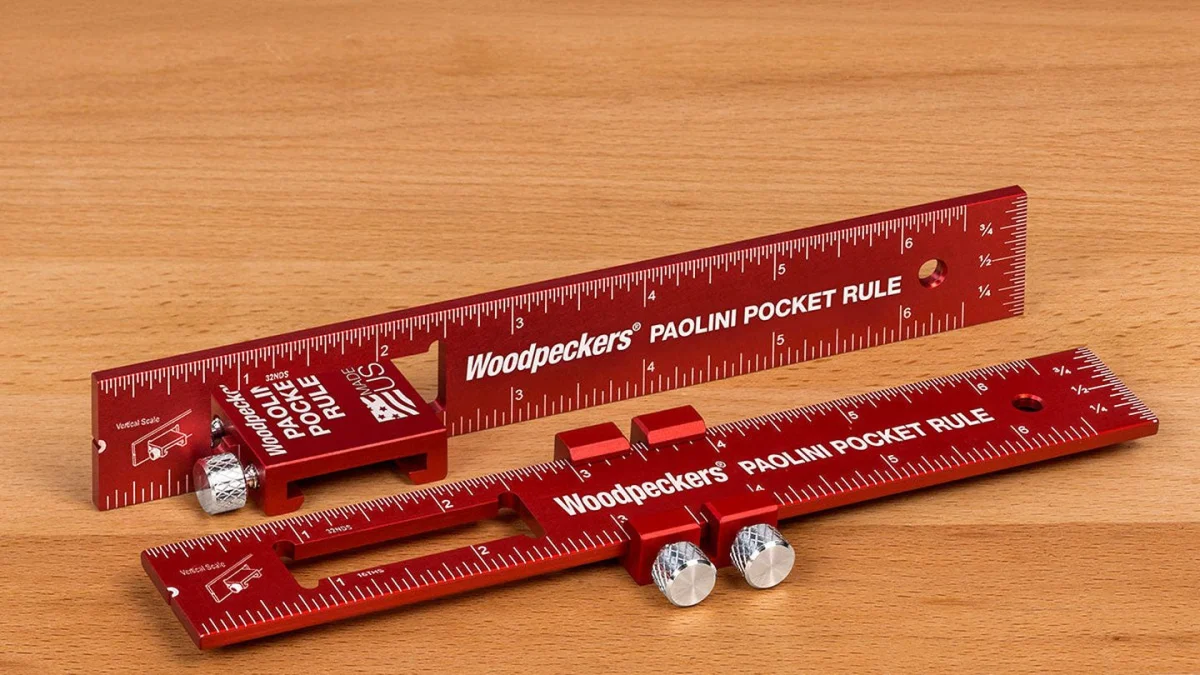
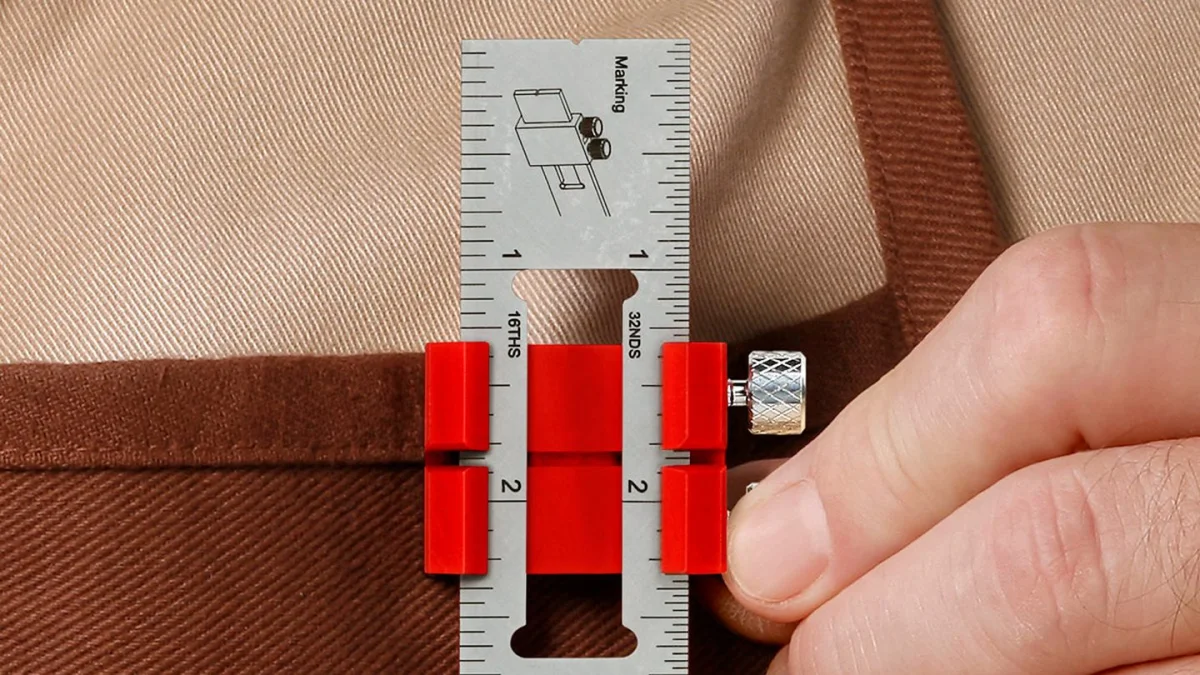
Most pocket rules ask you to pinch a measurement with your thumb and hope it survives the walk to the next board. This stop runs the full length of the blade and locks with two knurled screws. The setting you make on the first board is still the setting on the tenth, which turns repeat layouts from a memory test into a routine.
That lock carries every trick on the rule. A stop that creeps even a thirty-second of an inch ruins a marking pass or a height check, and a stop that needs a tool to adjust would defeat the pocket-sized purpose. Two thumb screws, set by hand, are the right answer here. My read is that this is the detail to judge first when you handle one in a shop, because the other functions are only as good as the hold.
A notch that scribes a line
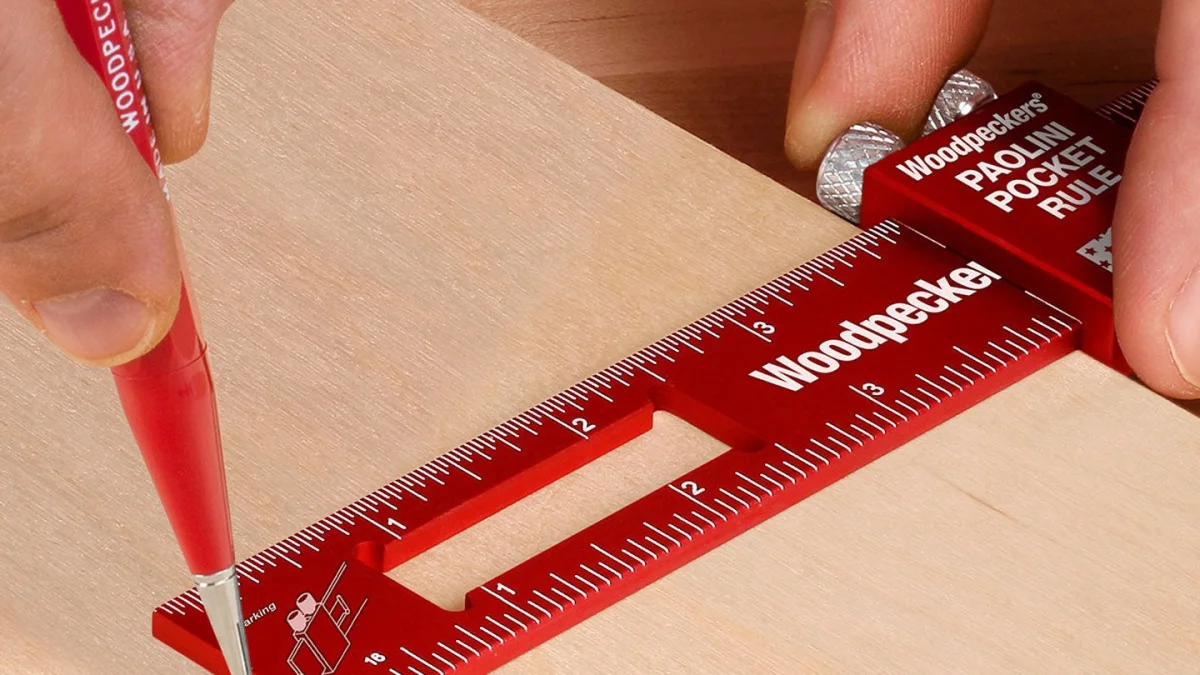
A notch cut into the end of the blade turns the rule into a marking gauge. Set the stop, seat a pencil tip in the notch, press the stop against the board's edge, and pull. The result is a line parallel to that edge at the distance you locked in.
A dedicated marking gauge still does this job better for daily production work. For a bench that only needs an occasional parallel line, though, one rule that also handles your repeat measurements saves a tool on the bench. Woodpeckers shows all three setups in a short film about the rule, and the marking gauge pass is the part worth watching.
Standing on end for bit and blade height
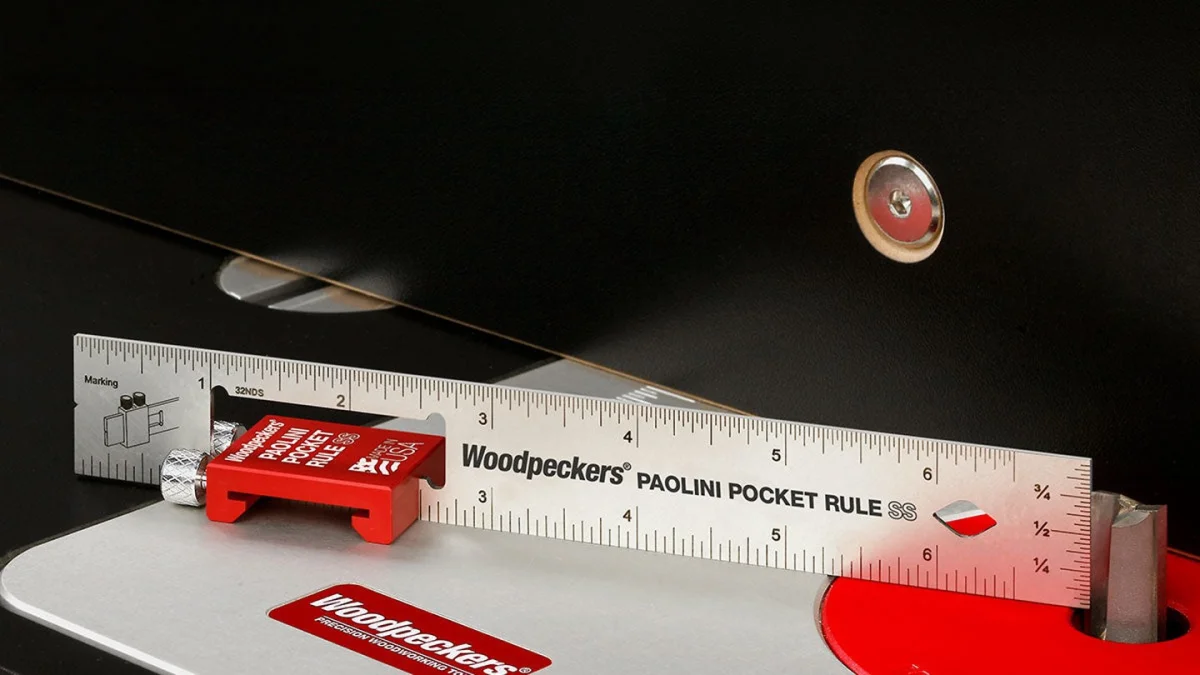
Slide the stop off the end of the blade, push it back in through the cut-out, and the rule stands vertical on its own. The engraved scale on the end now reads upward. You can set a router bit, a saw blade, or a dado stack to height against it while both hands stay on the machine.
Dedicated height gauges tend to sit in a drawer until setup day. This one rides in a pocket all day and gives the same reading, since the end scale flips with the blade, with coarse graduations on one side and fine on the other, matching the long edges.
Coarse and fine on both sides
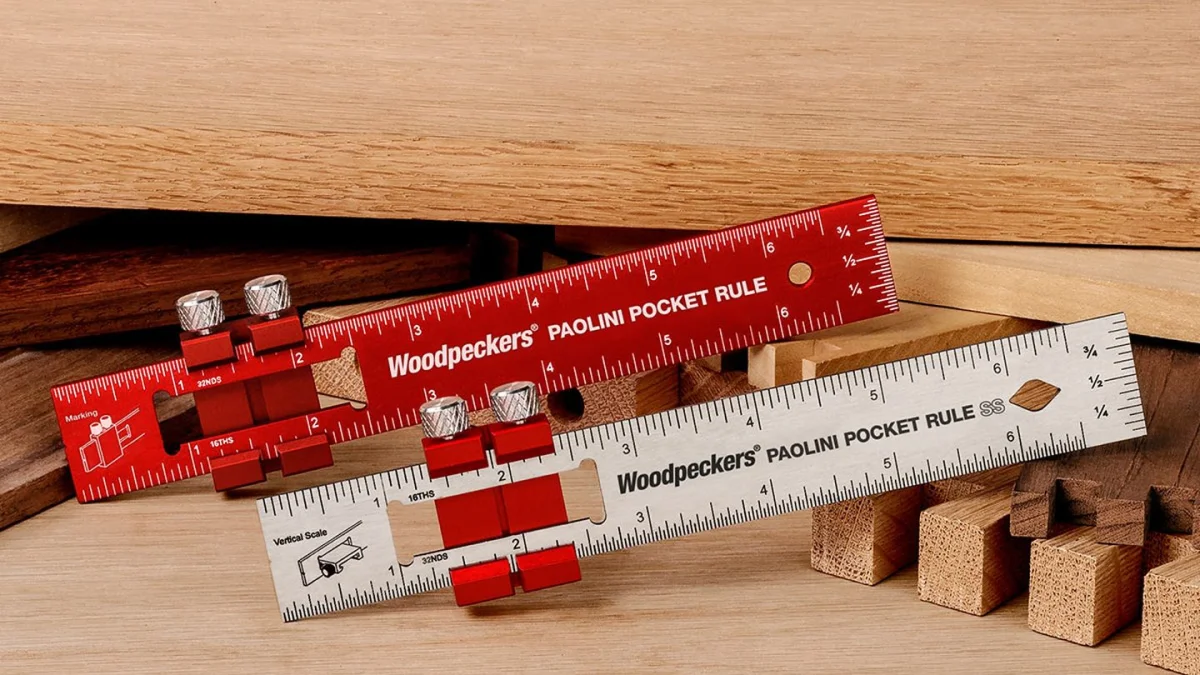
Standard models carry 1/16 inch graduations on one side and 1/32 inch on the other. The lines are aligned so that flipping the rule swaps coarse for fine without reaching for a second tool. The end scale follows the same logic. Under weak shop lighting, the white engraving on the red anodized aluminum is easy to pick out at a glance.
The metal choice comes down to thickness and feel. The aluminum version is 1/8 inch thick, light in the pocket, and has the high-contrast engraving. The stainless version drops to 1/16 inch, sits flatter against a board edge, and trades the red finish for plain metal. Both widths match, so the stop and the optional Rack-It mount fit either one.
Lengths, sets and where to buy
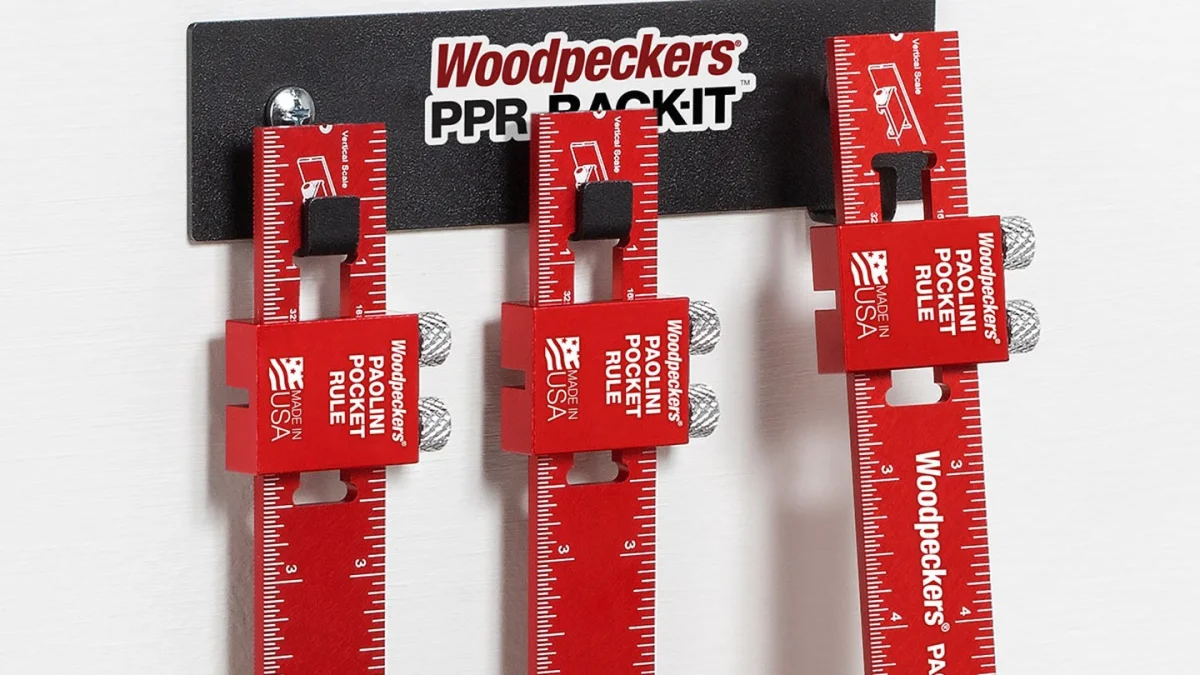
Singles come in 6, 8, and 12 inches in both metals. A set of three in matching material and graduations is listed at $124.99 in aluminum or $149.99 in stainless through Woodpeckers. The optional Rack-It wall mount holds a full set of three on hooks beside the bench. Amazon also carries the range, and the single-rule prices there run about $10 above the maker's own prices in the comparison below.
| Configuration | Amazon | At Woodpeckers |
|---|---|---|
| Aluminum 6 inch combo | $44.99 | $34.99 |
| Aluminum 8 inch combo | $49.99 | $39.99 |
| Aluminum 12 inch combo | $55.99 | $44.99 |
| Stainless 6 inch combo | $54.99 | $42.99 |
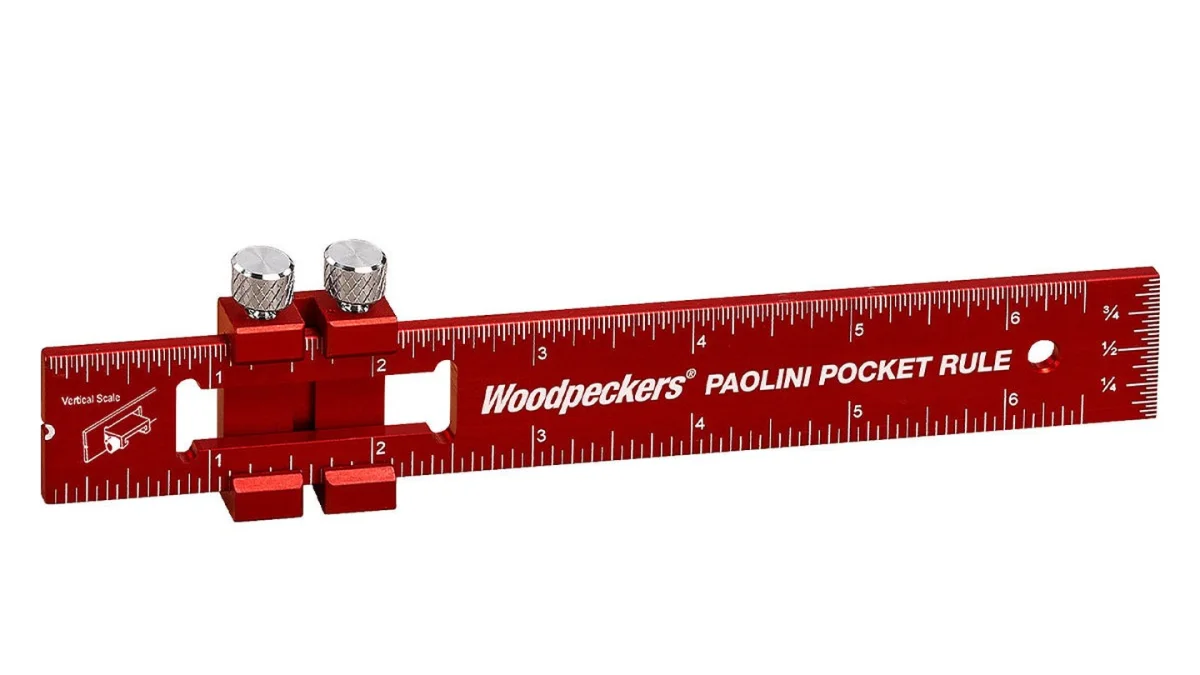
The 6 inch aluminum combo lists at $44.99 on Amazon and $34.99 direct from Woodpeckers. It's the same rule from the same Strongsville factory. Amazon is the quicker route for a single rule, while the maker's pricing gets more attractive if you're buying two or three lengths at once.
Who should buy it
Start with the 6 inch combo if your layout work happens at the bench and around the machines. It covers marking, repeat measuring, and height setting in a size that actually stays in a pocket. If you only take quick measurements from a plain steel rule, you don't need the stop, the notch, or the stand. Anyone who regularly marks repeat lines by hand, though, is paying for those three functions whether they buy them in one tool or three. That's the trade-off I'd weigh first, and it's the one that makes this rule worth a closer look.