First day cover ·
Buck's 110 and 112 Crossbar Elites Put a Modern Lock on a Classic Folder
Buck's Crossbar Elite 110 and 112 replace the lockback with a one-hand crossbar lock and switch to MagnaCut steel, priced at $254.99 and $244.99.
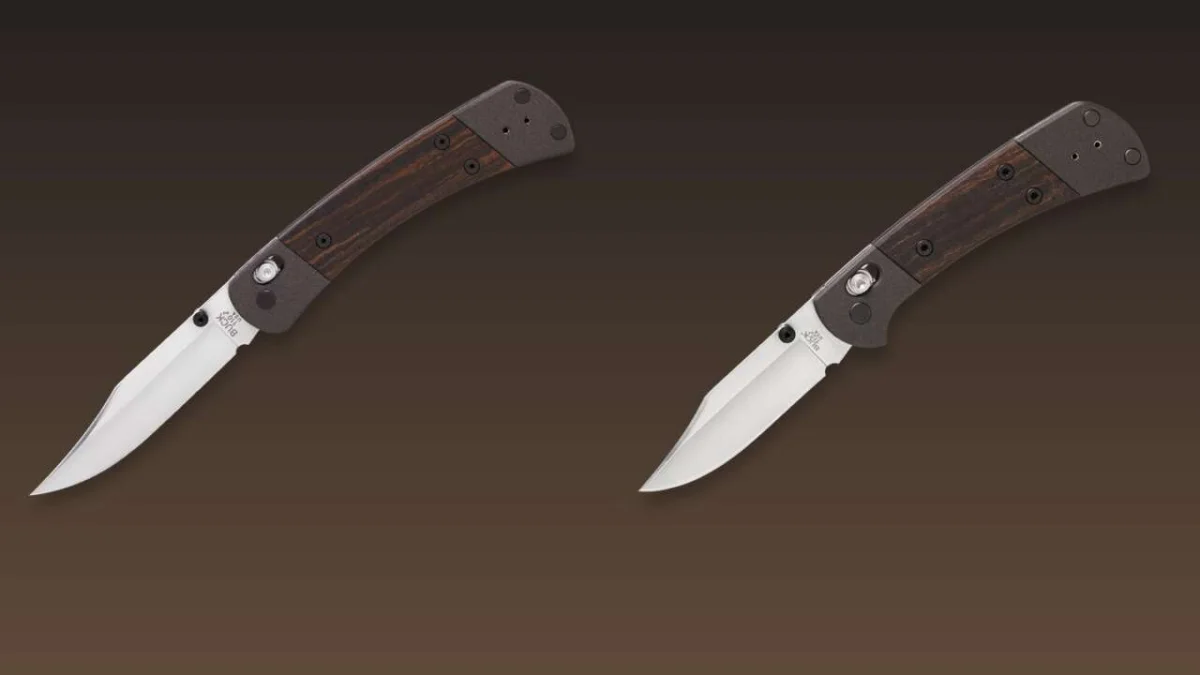
Few folding knives have shaped American carry the way Buck's 110 Folding Hunter has. It arrived in 1964, has sold more than 15 million copies, and set the template for the brass-bolstered, ebony-handled clip-point folder. Plenty of later knives borrow that outline. The new Crossbar Elite 110 and 112 keep the outline and change the two parts that have aged the most: how the knife opens and what the blade is made from.
Why the lockback is the thing to replace
The original's lockback is a sound mechanism, and it's why the knife lasted. It's also slow to use. You need both hands, a fingernail or a nick in the blade to start the opening, and a good grip to keep the handle steady while the blade swings out. The original also weighs 7.2 ounces and came without a pocket clip, so most owners ended up carrying it in a belt sheath. That combination made sense in 1964, when a hunter's main tool was usually fixed-blade and a folder was a secondary item. It makes less sense for someone who wants a folder to be the everyday knife.
Buck's answer for the 110 and 112 starts with the lock. My read is that this is the more significant change, because it alters how the knife is used rather than how it looks.
A crossbar lock you can run with one hand
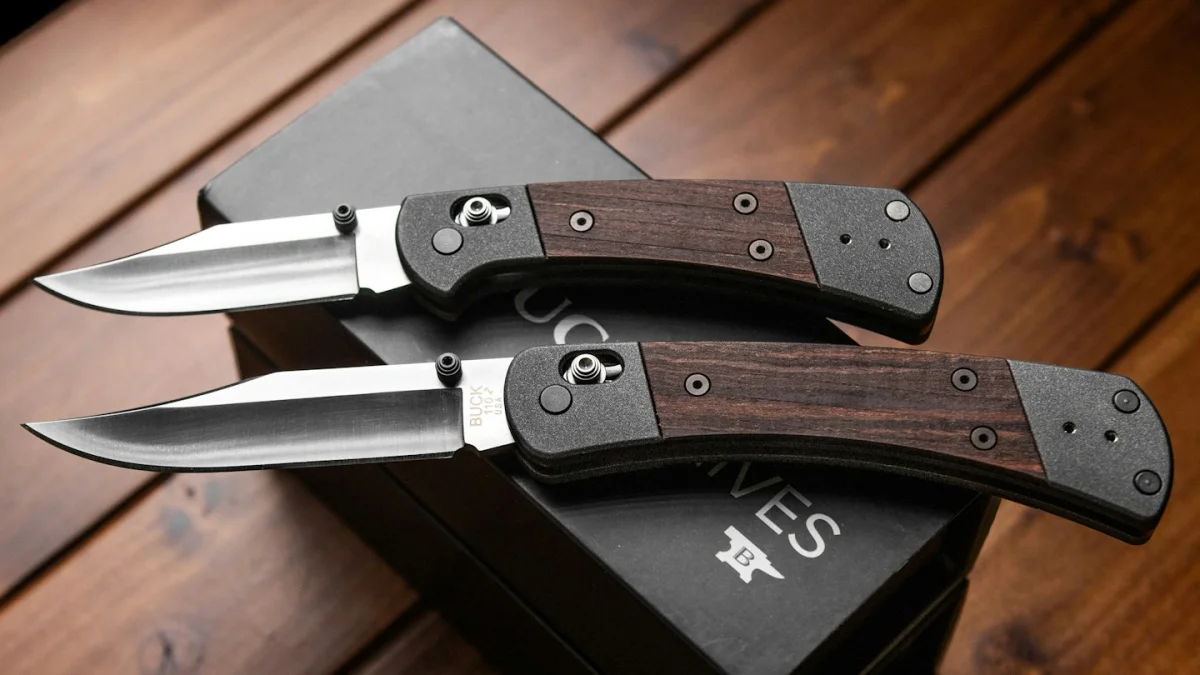
The crossbar mechanism replaces the lockback entirely. Pulling the bar back with a thumb or fingertip releases the blade, and the same motion works from either side of the handle. Dual thumbstuds handle deployment, so you can open and close the knife with one hand. In practice, that means you can cut a rope, adjust a line, or open a box without setting anything down.
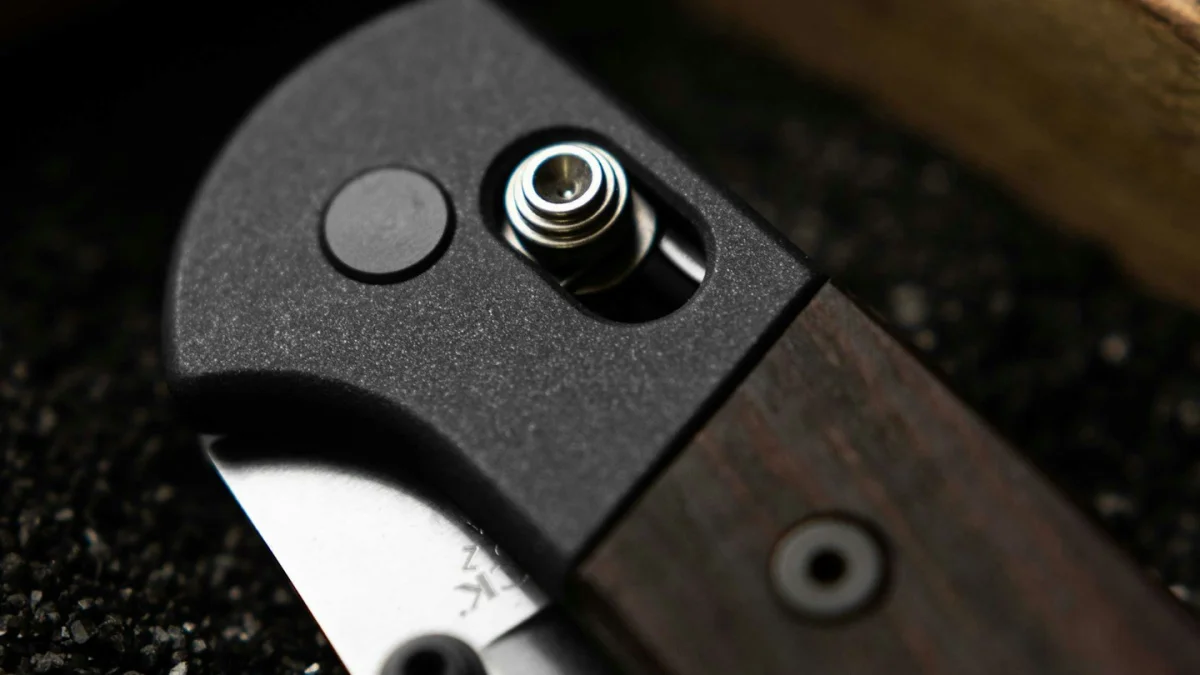
Buck first used this lock on its Range series and carried it into the Crossbar Elites once the mechanism had proven itself in a modern frame. Putting it on the 110 is the bigger statement, given how closely that knife is tied to the lockback. Buck isn't retiring the lockback, though. Traditional lockback versions stay in the lineup unchanged, so buyers who want the original mechanism can still get it.
MagnaCut replaces 420HC
The steel change is the second half of the update. Working 110s have long used 420HC, which sharpens quickly and is easy to maintain, but it doesn't hold an edge as long as more modern steels. Both Crossbar Elites use MagnaCut, and Buck says its BOS heat treatment is what brings out the balance of edge retention, toughness and corrosion resistance the steel is known for.
That balance is hard to get right. Steel alloys can be formulated to be hard, or tough, or resistant to rust, but each gain usually costs something elsewhere. Heat treatment decides how much of that potential survives into a finished blade, which is why two knives in the same steel can behave differently in the hand. Buck's position is that BOS is the process that lets MagnaCut deliver its full range. Real-world results will depend on use, and the reviews I'd trust most are the ones that test these blades over months rather than in a single session.
Satin finishes keep the blades looking like classic Bucks. The clip points stay, and a sharpening choil at the base lets a stone reach the full edge. The outline is the same as before. The steel and the lock are where the changes are.
110 or 112: a size decision
The 110 is the full-size option, with a 3.75-inch blade and 8.625 inches open. Aluminum construction brings the weight down to 3.5 ounces, roughly half the original's 7.2, in a handle about half an inch thick. That's the most noticeable difference for anyone who has carried the original. It fits in a pocket more easily, though a deep-carry clip is what makes that practical.
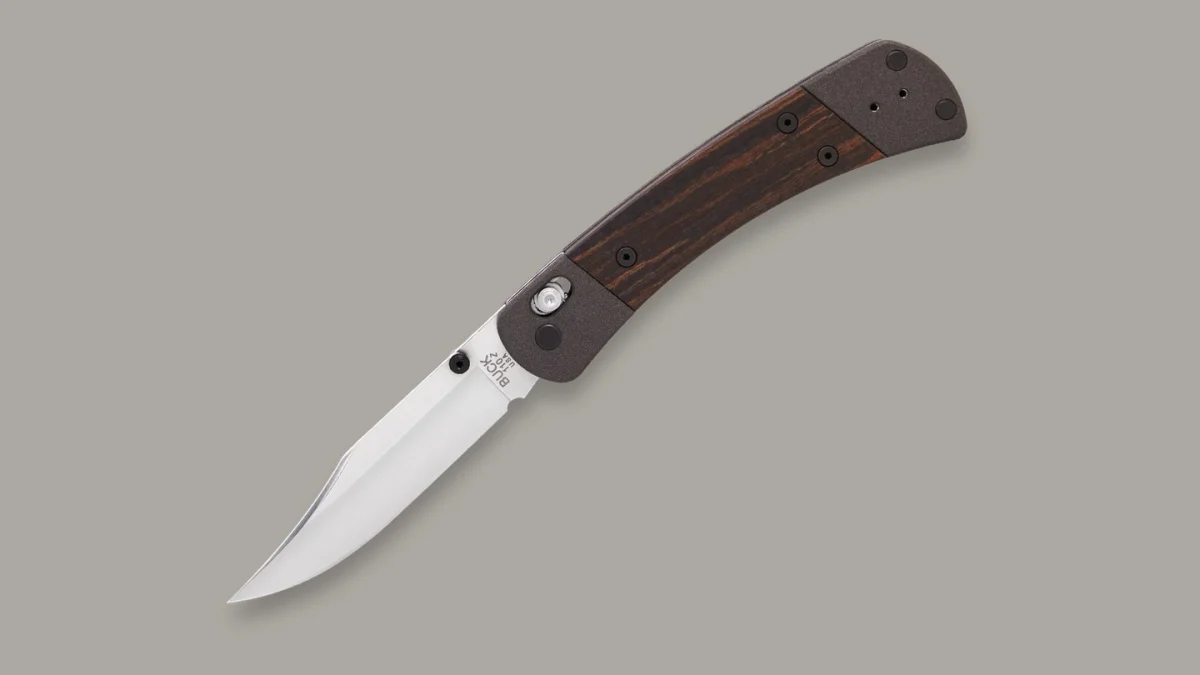
The 112 is the compact choice. Its blade is 3 inches even, and the knife weighs 3.1 ounces. The rest of the recipe carries over: MagnaCut, the crossbar lock, dual thumbstuds and the same handle build. Choosing between the two comes down to hand size and how much pocket space you have, not to any difference in quality.
Aluminum and cerakote in place of brass
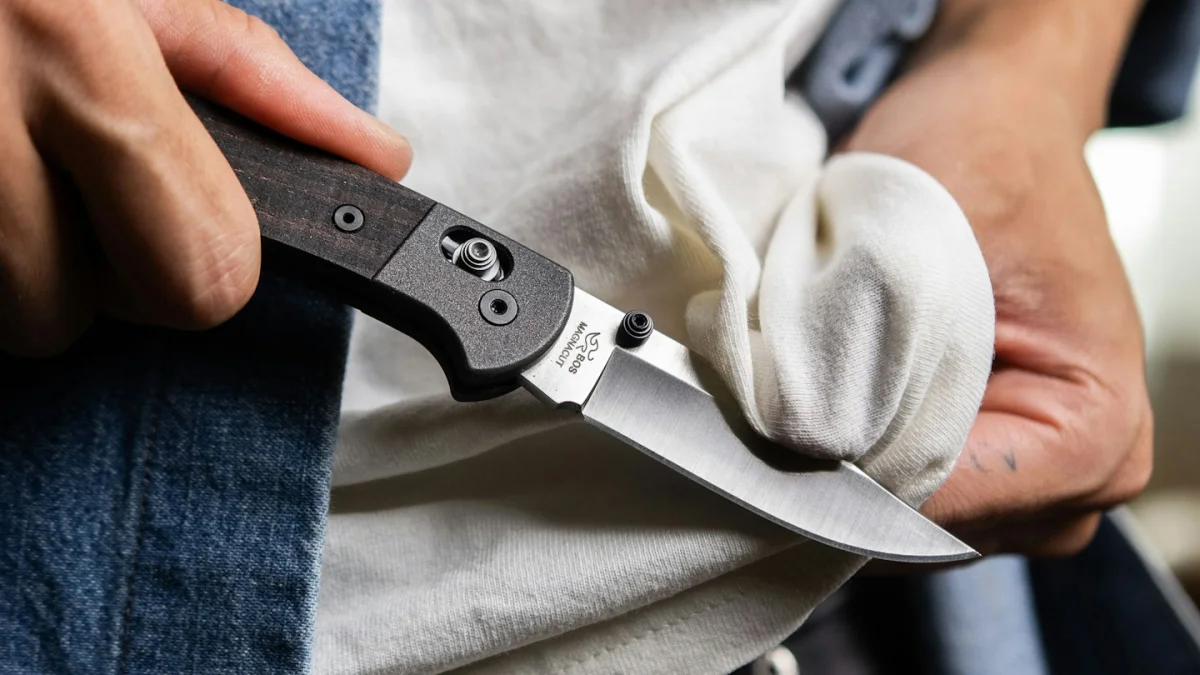
Brass bolsters gave the original its look and much of its heft. Here they're replaced by cobalt Cerakote over aluminum. DymaLux Macassar ebony inlays keep the dark grain of the classic handle, and Buck describes the material as stabilized and weather-resistant. From across a table, the knife still reads as a Buck.
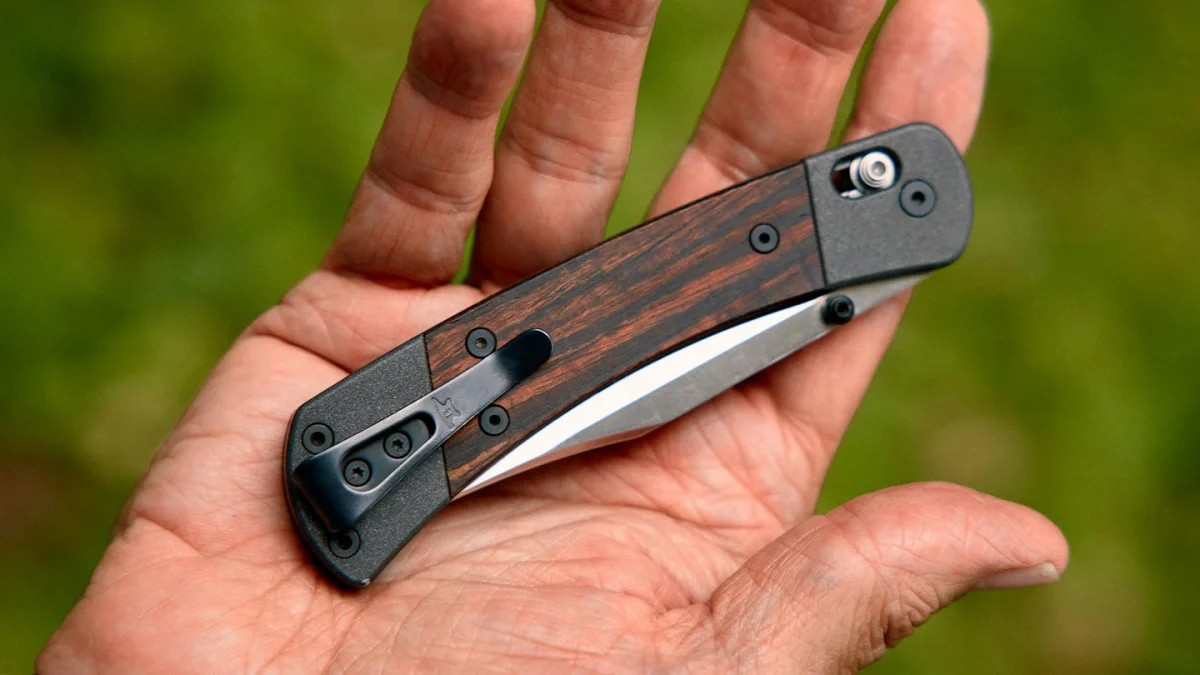
The carry hardware finishes the job. A black nitride deep-carry clip mounts for left- or right-side carry and can be removed if you prefer a sheath. Both knives are made in Post Falls, Idaho, and both come with Buck's Forever Warranty.
What you pay for the update
Buck lists the 110 at $254.99 and the 112 at $244.99, sold directly and through dealers. The premium over a standard 110 reflects the MagnaCut steel and the new lock. Compared with other MagnaCut folders, these prices sit in the middle of the range rather than at the top.
Price: $254.99
Where to buy: Buck Knives
Price: $244.99
Where to buy: Buck Knives
If you grew up with the lockback, nothing about that knife has changed, and it's still in the lineup. If you always wanted the classic silhouette without the two-handed opening, the Crossbar Elites are the first Buck folders that deliver it. For everyday carry, the 112 is the easier pick. The 110 is the one that feels like the original in the hand, just quicker to open.