First day cover ·
Fox Tribal K FX-803 Review: A Fixed-Blade Karambit at $151.52
Fox's Tribal K FX-803 puts a curved karambit blade on a fixed frame with N690Co steel and a G10 handle. Here's who it suits and where it falls short.
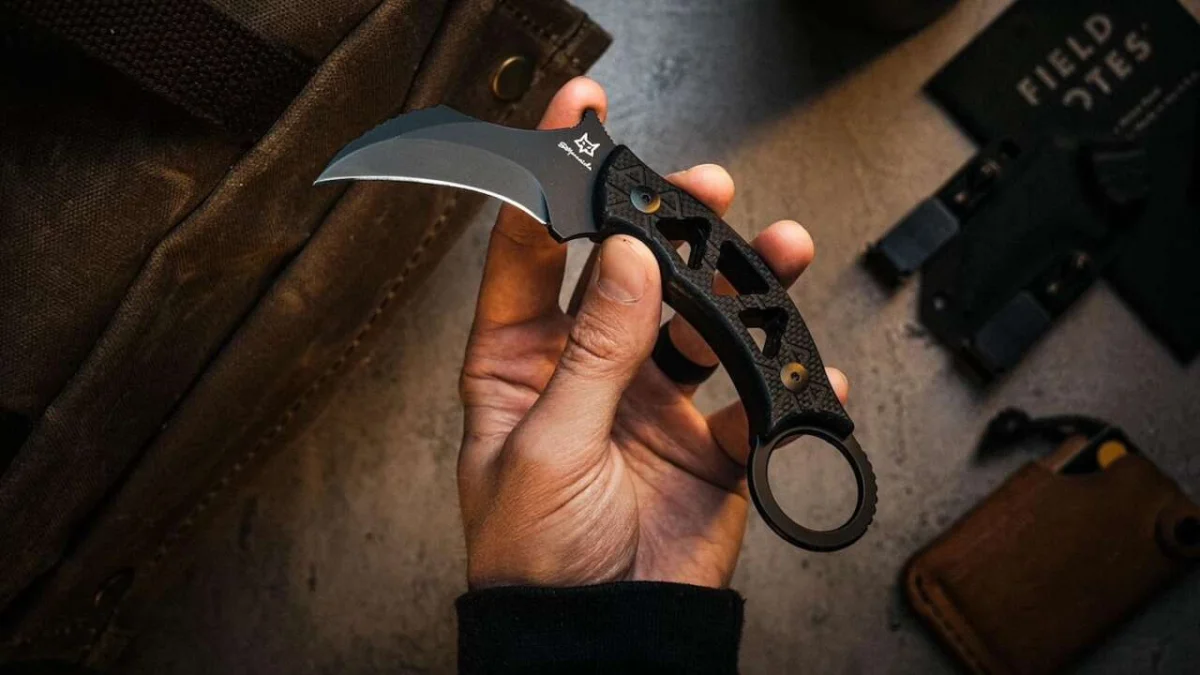
If you want a karambit that doesn't fold, the Fox Knives Tribal K FX-803 is one of the more direct options. Fox lists it at $151.52 with a 2.24-inch N690Co stainless steel blade, a black G10 handle, and a weight of 3.42 ounces (97 grams). My read is that the buying decision starts and ends with the blade shape. Everything else is supporting detail.
Why the Curve Changes Everything
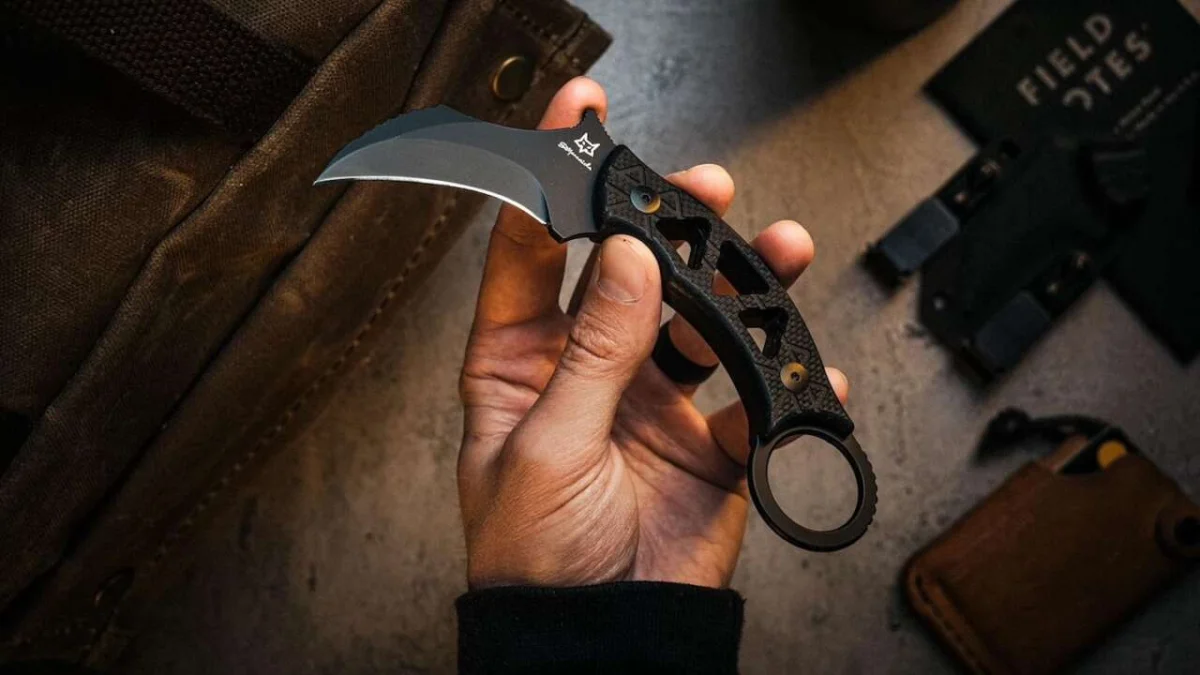
A karambit is a claw-shaped knife with an inward-curving edge and a finger ring at the base of the handle. That geometry is what sets it apart from a straight or drop-point blade. The edge contacts material along an arc rather than a long flat line, so the cutting motion feels different in the hand. Fox describes the Tribal K as sharing that profile, and the curve is the reason you'd consider this knife in the first place.
The trade-off is that you have to learn the knife. People used to a utility blade tend to reach for it the same way they would reach for a box cutter, and that doesn't always work. Grip, angle and the direction of the cut all need a bit more attention. If you pick one up expecting a general-purpose tool, you'll probably be disappointed. If you go in knowing it's a specialist, the curve starts to make sense.
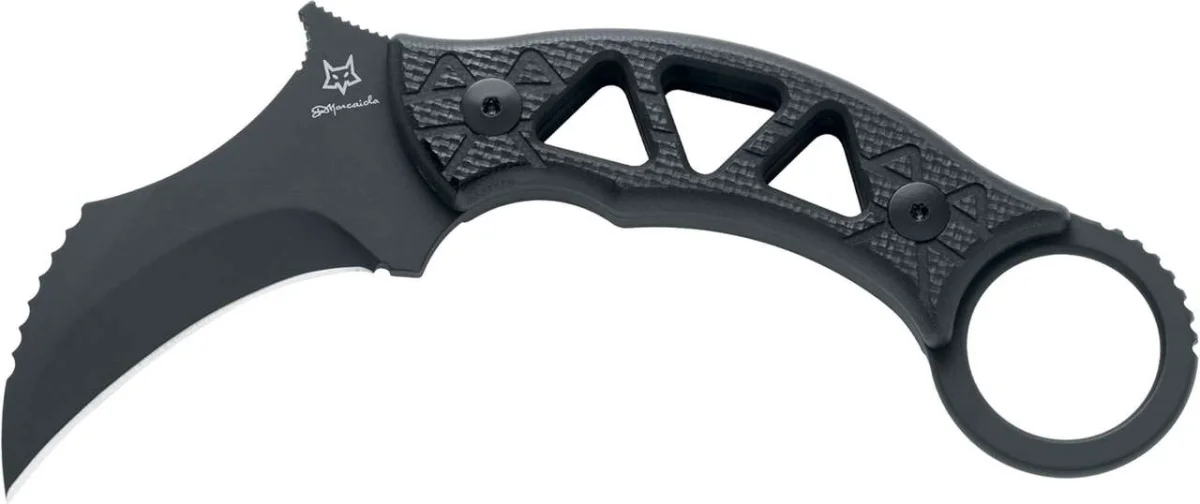
Fox lists the knife at 5.83 inches overall, so it stays compact enough to carry without dominating a pocket or belt. The blade itself is a 3 mm thick N690Co stainless steel piece with a Black Top Shield coating. Fox gives its hardness as 58 to 60 HRC.
What N690Co and the Coating Bring to the Table
N690Co is a stainless steel that's common in knives aimed at buyers who want corrosion resistance without giving up much edge capability. In general terms, stainless choices like this tend to trade a little toughness for rust resistance and ease of maintenance. Fox's hardness range of 58 to 60 HRC sits in a band that's typical for everyday carry knives, which suggests a blade meant for regular use rather than heavy prying. The Black Top Shield coating adds a dark finish to the blade, and Fox doesn't go into detail on how it affects wear, so it's worth checking how it holds up after your own testing.
There's a practical angle here too. A fixed blade doesn't have a pivot or lock to clean, so maintenance is mostly about the blade surface. Wiping it down after use and storing it dry is the sensible routine, and it's the same advice you'd give for most stainless fixed blades.
The G10 Handle and the Finger Ring
The handle is black G10, a fiberglass-based composite that's widely used in knife construction. It's rigid, it doesn't absorb moisture the way wood does, and it holds up to handling. Paired with a stainless blade, it gives the knife a modern, low-key look. The finger ring is part of the karambit identity, and it's the element that lets you control the blade's orientation in the hand. Fox says the handle's triangular patterns draw on Filipino martial arts designs. That's a design story rather than a performance claim, and it helps explain the knife's visual character.
Whether the ring suits you depends on your hand size and grip habits. It's worth handling a karambit in person before buying one, if you can, because the ring changes how the knife sits and how you'll reposition it during use.
Fixed Construction and the Kydex Sheath
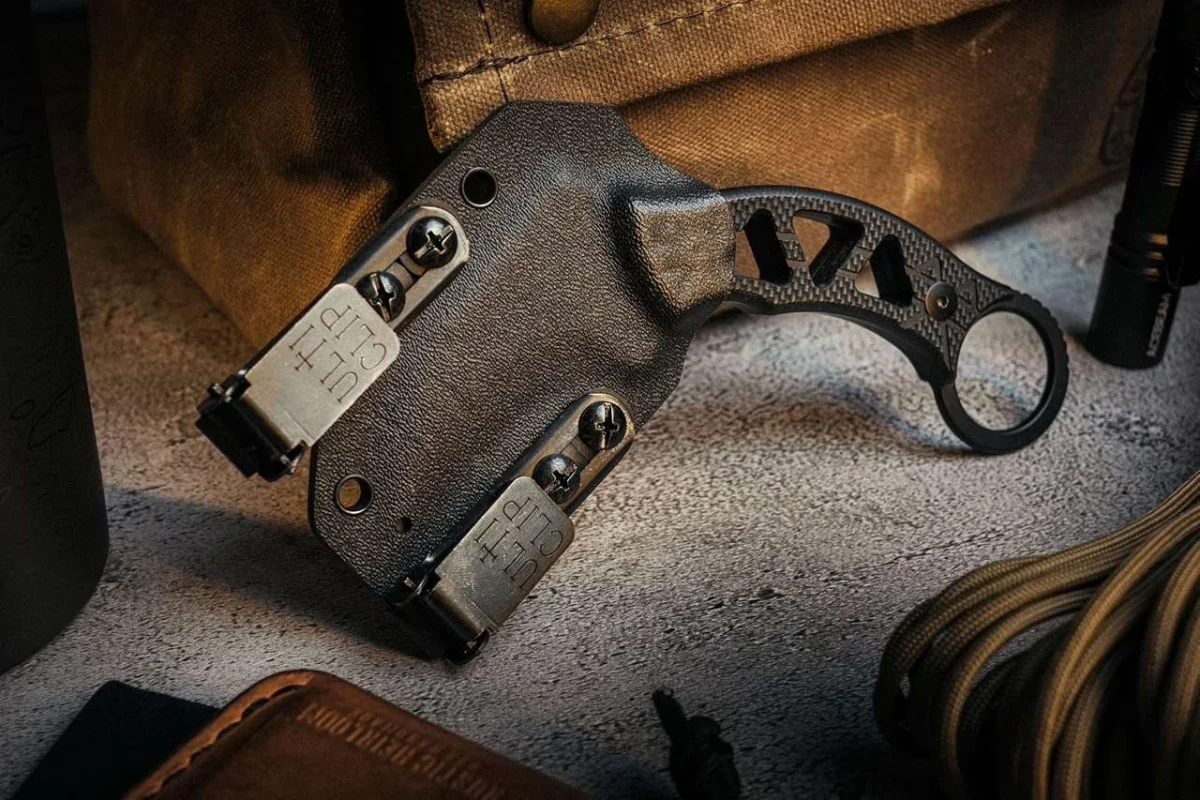
Fox includes a Kydex sheath with the FX-803. Kydex is a thermoplastic that's rigid and generally easy to clean, and sheaths made from it tend to hold a blade firmly. Because this knife doesn't fold, the sheath is the only thing covering the edge during storage and transport. That's a bigger deal than it sounds. A folding knife can be closed and carried in a pocket, but a fixed blade needs a proper cover, and the included sheath handles that job.
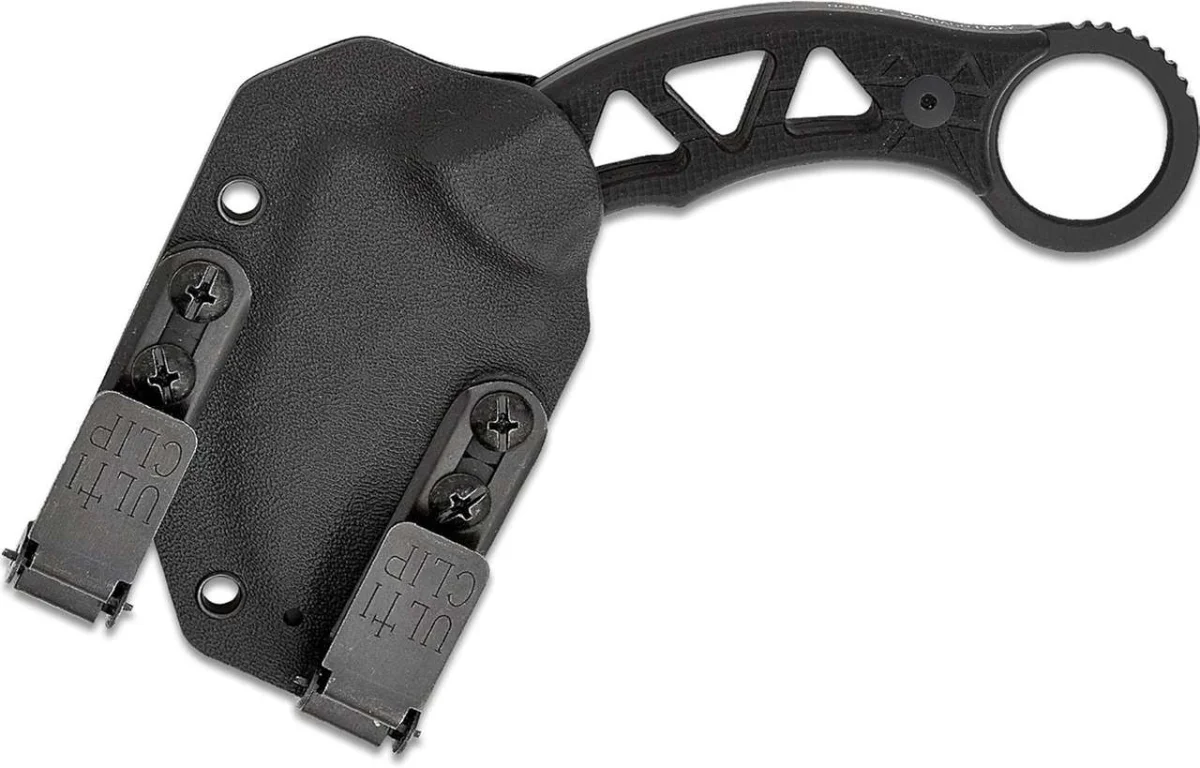
If you're used to pocket knives, expect a different carry routine. You'll carry it on a belt or in a bag with its sheath, and you won't be clipping it into a pocket the way you would a folder. For some people that's a plus, since the blade is always covered and in a known position. For others, it's an annoyance that pushes them toward a folder.
Where It Fits: Outdoor Use and Collections
The curved blade gives this model a different cutting profile from a conventional outdoor utility knife. For ordinary camping chores, a straight or drop-point blade is still the more familiar and versatile choice. If your first priority is a single knife that handles food prep, rope, and general campsite tasks, I'd look at a conventional fixed blade first. The FX-803 makes more sense as a specialist tool or as an addition to a collection that already has a workhorse blade.
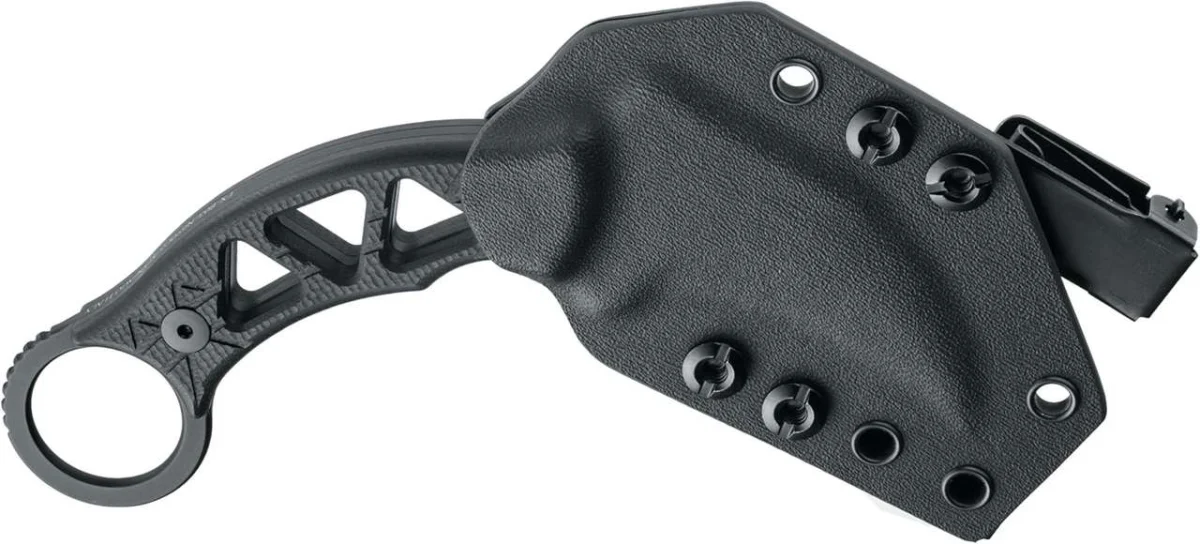
That's the core of the recommendation. This is a knife for someone who wants a karambit specifically, in a fixed format, with a composite handle and a sheath included. It isn't trying to be the one blade you own.
Who Should Buy It
The FX-803 suits buyers who already know they want a curved karambit and prefer the fixed-blade layout. The stainless blade, G10 handle and included Kydex sheath cover the basics, and the $151.52 price, listed on Amazon, puts it in the range of a serious collector's piece rather than an impulse buy.
If versatility, a conventional blade shape or folding pocket carry comes first, I'd spend that money somewhere else. A drop-point fixed blade or a good folder will do more of the everyday work with less of a learning curve. The Tribal K is worth the money if the curve is the point, and it's a poor choice if you're buying a knife to solve a generic problem.