First day cover ·
iPhone Duo Screen Cracks Point to a Hinge Problem, and Replacements Are Scarce
Bloomberg's Mark Gurman says the cracked Duo inner screens are real, and he suspects a faulty hinge batch. Replacement stock is tight.
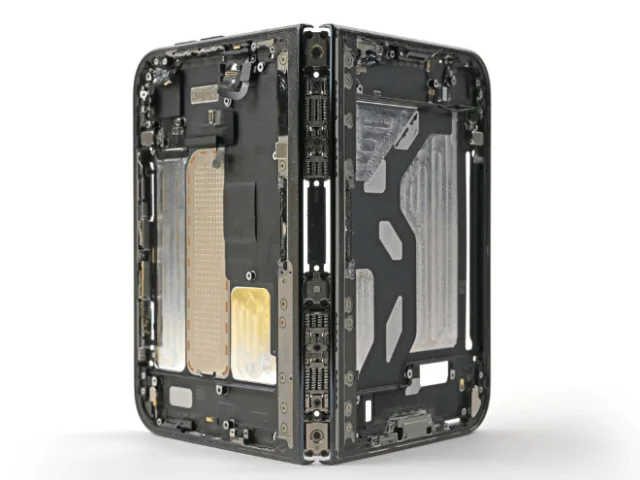
The cracked inner screens on Apple's first foldable iPhone, the Duo, look like a genuine hardware problem, and my read is that the hinge is the place to start looking. Mark Gurman of Bloomberg News reports in his Power On newsletter that the so-called "Crackgate" issue has hit real customers during ordinary use. He says the failures he reviewed weren't edge cases or handling mishaps.
Here's the thing about foldable screens: they're only as durable as the mechanism underneath them. Gurman's working theory is that a batch of units shipped with a hinge component that doesn't fully unfold. If the panel never reaches its flat position, the flexible display gets pressed from below every time the phone closes and opens, and the central fold area takes the stress. That's a plausible failure path, though it's still a theory rather than a confirmed root cause.
What owners are reporting
Gurman has also pushed back on the idea that the reports are exaggerated or invented. The pattern he describes is consistent: the crack shows up along the middle of the inner panel shortly after normal opening and closing, not after months of wear. Social posts circulating since the weekend describe the same sequence, with owners mentioning a stiff hinge and a noticeable crunch when they open the device before the screen cracks. Those posts are anecdotal, and I'd treat them as color rather than evidence. Still, they line up with what Gurman says he's seen.
The fact that failures appear quickly is what matters most here. Long-term wear problems usually surface gradually, and that gives manufacturers time to find them in testing. A defect that shows up in the first weeks of ownership usually points to a manufacturing or assembly issue, which is why the hinge-batch explanation is getting attention.
Apple's response and the replacement bottleneck
Apple has acknowledged an issue affecting a "small number" of devices and has told affected owners to contact AppleCare for a replacement. That's the company's position, and it's a narrower description than the "Crackgate" label suggests. Whether the number stays small will depend on how many units came from the same production run, and neither Apple nor Gurman has put a figure on that.
The harder problem for owners is getting a replacement at all. The same supply tightness that has made the Duo hard to buy since launch is now hitting repairs. Gurman's reporting ties this to a decision to get the phone into buyers' hands in October, partly to support new CEO John Ternus and to capture holiday-quarter sales, even though manufacturing yields were low. The hinge is a complex assembly with more than a hundred parts, and that's a lot of places for variation to creep in when production is pushed hard.
Stock distribution has made things worse. Some accounts say around 80 percent of the initial inventory went to physical stores. Online delivery estimates have stretched out for months, and many stores have little or no replacement stock on hand. If you're in that situation, AppleCare may offer options that a store swap can't, so starting there is the sensible first move. Don't count on walking into a store and leaving with a new unit.
What this means if you own one, or plan to buy
If you already have a Duo, pay attention to the hinge. A tight feel when you open it, or a crunch during the first few weeks, is the symptom people are describing. Contact AppleCare early instead of waiting for the screen to crack, and keep your purchase records handy. If you're considering a Duo, I'd wait for clearer information on whether Apple tightens its quality checks or changes the hinge assembly. Waiting also gives supply time to catch up, which is the other half of the problem.
That said, I wouldn't write off the design yet. A bad batch is a fixable problem, and this one appears to be concentrated rather than baked into every unit. The bigger question is whether the hinge's tolerances hold up across full production volumes. My read is that the next few weeks of replacement data, and whether the stock situation eases, will show whether this was a production hiccup or a design weakness that needs more than a process fix. Watch for Apple's updated guidance, and pay attention to whether the replacement queue actually shortens.